Promoting yourself as a new DJ comes down to three things: a tight, findable identity; a demo that respects the promoter's time; and a track record built from small rooms, not big claims. Do those well and the bookings follow slowly. Do them badly and no amount of posting saves you.
The qualification up front: none of this is fast. Promotion in this scene compounds. A promoter who files your demo away tonight may book you in a year, after hearing you play a warm-up or seeing your name on a small lineup. The word itself has always meant moving something forward — Merriam-Webster defines promote as helping something advance or grow — and that is the honest frame. You are not going viral. You are building a case, one room at a time.
What does a new DJ actually need before promoting anything?
A sound, a name and a demo. Skip any one and the promotion has nothing underneath it.
Your sound is the easiest to explain and the hardest to do. It is not a genre tag. It is the two or three things a promoter could say about you in one sentence: "deep, dubby house, warm-up specialist" or "fast, percussive trance with a rave edge." Vague positioning is the number one reason demos get skimmed and forgotten. Pick a lane you can defend for a hundred sets.
Your name should be one word or two, easy to spell, easy to say out loud over a mic, and not already taken on the platforms that matter. Search it before you commit. Check streaming, check Bandcamp, check the lineups of local events. A name collision with a mid-level touring DJ is a problem you want to find on day one, not after your first flyer.
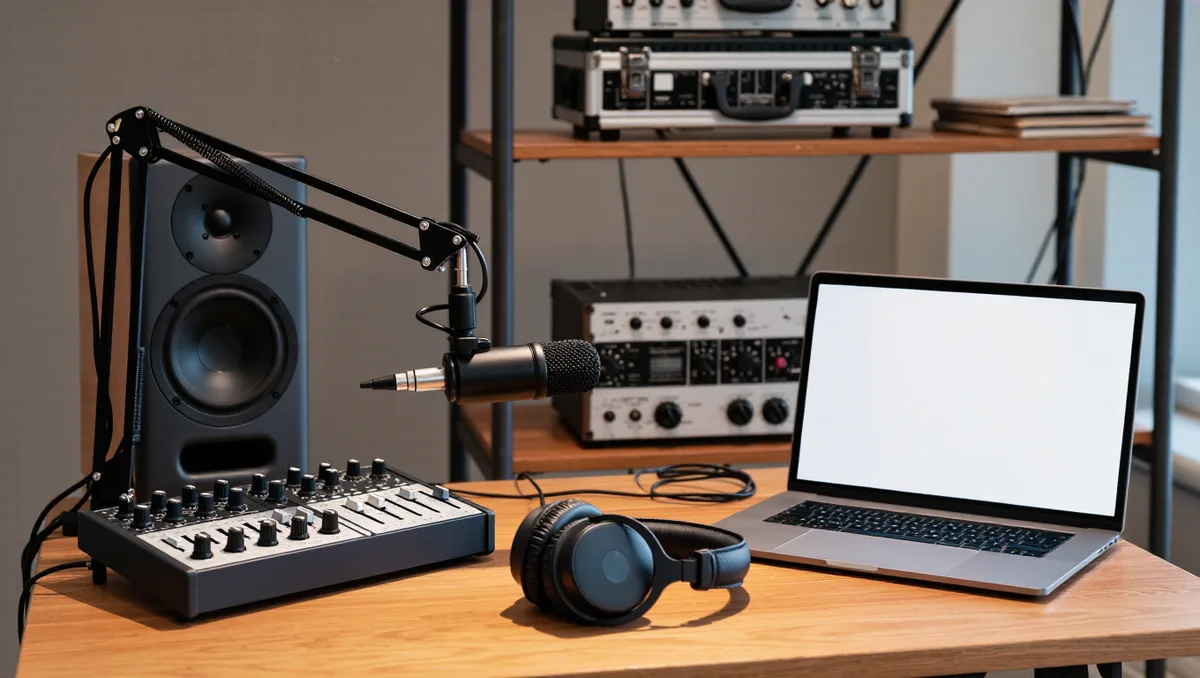
Your demo is your actual product. We cover the etiquette below, but the bar is simple: thirty to sixty minutes of music that sounds like you, recorded clean, with no mixing errors you would not want heard at 2 a.m. If you cannot yet record a clean hour, that is the skill gap to close before any promotion. Everything else is decoration on an empty floor.
How do you build a DJ brand that promoters remember?
A brand is just a promise a promoter can repeat to their crowd. Keep it short, keep it true, keep it consistent.
Practical steps:
- Write the one-liner. One sentence describing what you play and where you fit in a night. If it takes a paragraph, it is not a brand yet.
- Make it look the same everywhere. Same name, same photo style, same bio on every platform. Promoters cross-check. Mismatched profiles read as careless.
- Keep a simple press kit. A short bio, one good photo, links to two or three mixes, your city, and a contact that you actually check. No PDF the size of a small album.
- Record everything you play. Not to post — to listen back. The sets worth sharing reveal themselves later.
One caution from the economics of the scene: never pay for a slot. Pay-for-play lineups burn credibility fast, and promoters talk to each other. If a slot costs money, it is a showcase or a hire-the-room situation — label it honestly in your own head and never list it as a booking.
Which social platforms matter for DJs — and which waste your time?
The honest answer: the platform where your local scene actually lives, plus one audio home. Everything else is optional.
Find out where your city's promoters, crews and ravers post. In most scenes that is one short-video app and one messaging or community platform. Post there, consistently, but post things people want: clips of your best transitions, ID teasers, the odd photo from a night you played. Do not post engagement-bait. The scene can smell it.
Your audio home is where a promoter goes to hear a full set. Upload mixes regularly, title them clearly, and keep the best one pinned. A page that says "check my SoundCloud" with three uploads from 2023 is worse than no link at all.
What wastes your time: chasing follower counts on platforms your local scene ignores, arguing in comment sections, and posting more about being a DJ than about the music. Nobody books a personality. They book a room moving.
What is proper demo etiquette for new DJs?
Short, targeted, and easy to say no to.
Send the right demo to the right person. A warehouse techno promo to a brunch-terrace booker tells them you did not look at their night. Listen to the venue's residents first, then shape the demo toward the slot you actually want — usually the warm-up, which is where nearly every new DJ starts. Our guide to The Art of the Warm-Up Set, Explained covers why that slot rewards restraint over fireworks.
Then follow the format the promoter prefers. If their listing says a link, send a link. If it says email, send a short email: who you are, your city, one sentence on your sound, one link, thank you. No attachments, no life story, no follow-up three days later. A polite check-in after a few weeks is fine; pestering is how you get muted.
And this part matters more than any post: be good in the room before you ask for the room. Go to the nights. Support the residents. Talk to people after their sets, not during. The scene is small and its memory is long, in both directions.
How do you get your first club gig without a booking?
You build alternatives that promoters can see. Nobody's first set is a Saturday peak-time slot.
- Start where the stakes are low. House parties, record store events, beach days, online streams, community radio. Anywhere you can record a set in front of people. These are legitimate bookings; list them plainly.
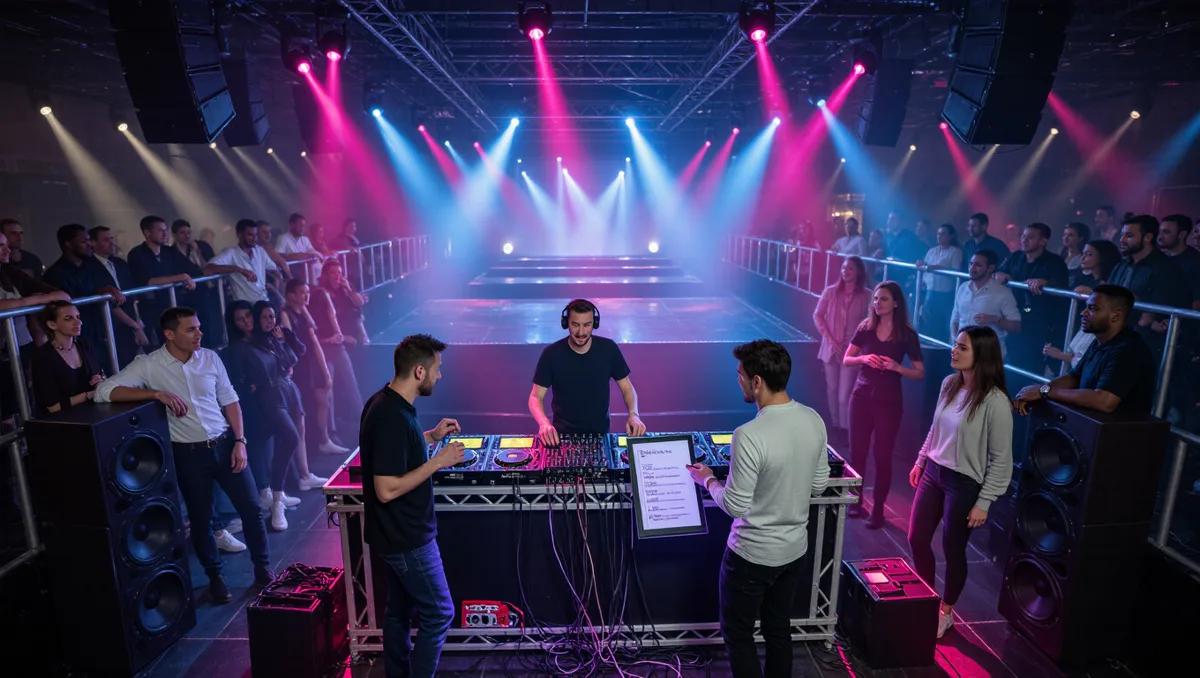
- Throw your own night. Even a small one. A twenty-person rooftop party with a good recording is a better calling card than a hundred posts asking for gigs. It also teaches you what promoters deal with, which makes you easier to work with later.
- Befriend the scene, not the bookers only. B2B sets with peers, collaborative mixes, tag-team radio. Our piece on B2B DJ Sets Explained: Etiquette and Technique unpacks how shared decks share audiences too.
- Post the evidence. A clean recording of a real room reacting is the strongest promotion a new DJ has. Footage of people dancing beats any caption.
When a small slot does come, treat it like the headliner. Show up early, know the gear, read the floor. The full mechanics of what happens on the other side of the email sit in How DJs Get Booked: The Club Guide.
What this means: promotion is proof, repeated
Strip the tactics away and self-promotion as a DJ is one move, done over and over: make something good, put it where the right people can find it, then go back to the studio. The name, the socials, the demo etiquette — all of it exists to deliver proof that the floor moves when you play. Build the proof first. Promote second. That order is what separates a DJ with a career forming from one with a content calendar and no bookings.
Keep your expectations honest, your recordings clean, and your name on the flyer eventually. The scene rewards the ones who are still there when the trend cycles turn.