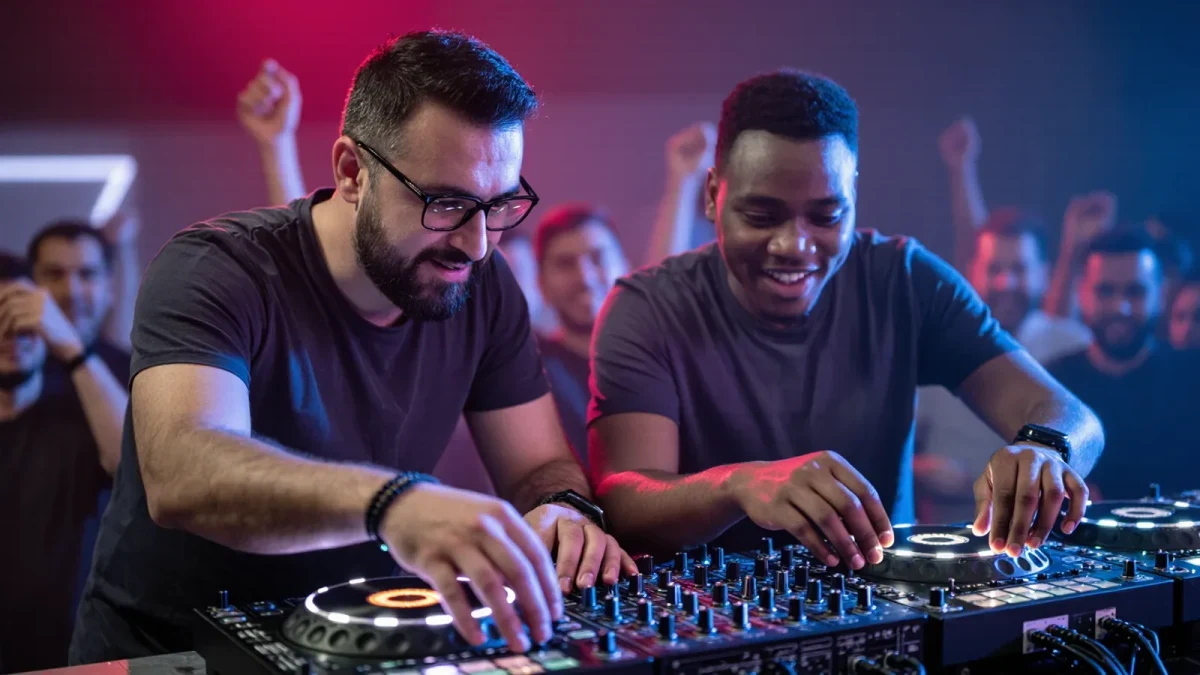
A B2B — back-to-back — set is a performance where two DJs share one booth and alternate selections, typically trading one or a few tracks each across the set. Done well, it is the format that produces a set neither DJ would have played alone: unexpected pivots, records rescued from deep folders, competitive escalation. Done badly, it is a duel with the crowd as collateral. The difference is not talent — it is a small set of techniques and manners that make the format work, from handover timing to track-selection diplomacy.
B2B is a format, not a genre — house heads, techno crews and drum & bass collectives all run it, and each scene bends the etiquette slightly.
Why do DJs play back-to-back at all?
Three reasons dominate. Chemistry: two artists whose records talk to each other can build something neither books alone — which is why B2Bs headline festival closers and after-hours, where the format's unpredictability is the draw. Community: within crews and labels, the B2B is the natural expression of a shared scene identity, the whole roster passing the booth like a conversation. Economics and fun: splitting a long closing slot keeps both DJs fresh, and a great B2B is simply the most play the job offers.
The format also has a unique dramatic engine: friendly competition. Each DJ answers the other's move — a harder track, a deeper cut, a better blend — and the set ratchets upward in a way solo performance can't manufacture. The crowd senses the game and picks a side. That energy is the entire product.
Which is also why promoters love billing B2Bs: it combines two fanbases in one slot and promises a story — will they outdo each other — before a single track plays.
How does a B2B set actually run?
The mechanics are simple and mostly settled by agreement before the set. The most common rotation is one track each: DJ A plays a record, DJ B mixes in the next, and so on. Variations include two or three tracks each for longer arcs, tag-team-by-track-section where a partner drops a loop or acapella over your record, and freeform, where the handover happens whenever it feels right between DJs who know each other's instincts.
One DJ is usually mixing at a time while the other browses, preps and anticipates — the browsing half of a B2B is not idle; they are reading the room's response to their partner's choice and digging for the answer. Booth logistics matter more than in solo sets: agree USB stick or laptop conventions beforehand, know whose headphones channel is whose, and keep the booth tidy enough that two people can move without unplugging anything.
Tempo and key discipline hold the arc together. Because two libraries meet mid-air, an agreed rough BPM range and mutual attention to key compatibility keep the set coherent; the fastest way a B2B sags is partners quietly steering different sets in different directions.
What is B2B etiquette?
The unwritten rules are consistent across scenes. Do not hijack the mixer mid-transition — your partner's blend is theirs until it is done. Do not reach for their faders or EQ without invitation; suggestions are spoken, not performed. Match the game's tempo: if your partner is building a patient groove, do not slam a peak-time record over it — answer within their energy bracket or lift one honest notch. Never play the record your partner clearly signalled they were loading. And the cardinal one: the B2B is a shared set, not a showcase — if you are playing your best records twice as hard because someone is watching, the floor hears the difference.
Communication is mostly non-verbal and mostly learned by playing together. A nod, a pointed finger at the browser, a lean toward the booth — the format develops its own sign language within a few sessions. Verbal check-ins live at transitions: next tempo, an idea for direction, one-bar warnings before a big drop.
And the etiquette extends to the promoter's clock. Agree who closes before the last track — the cleanest convention is the DJ who started also finishes, bookending the set — and end on time, together.
How do you prepare for a B2B?
Prepare less than you think, but prepare the right things. Do align the fundamentals: rough BPM window, genre borders, how many tracks per turn, who closes. Do share a few records deliberately — one or two planned link tracks you both love steady the set if the early room is thin. Do not script the sequence: the format's value is the conversation, and a rehearsed B2B is a duet performed by tape.
Prepare your library for interrogation. Bring more range than a solo set needs — your partner's choices will open doors your usual arc never touches, and folders organised by energy and key let you accept the invitation fast. And prep your fallbacks: if your partner goes somewhere your crate cannot follow, have the bridge records ready.
Rehearse together once if stakes are high — a festival B2B between two DJs who have never shared a booth benefits from even one private session to learn each other's hand speed and transition habits. First-time B2Bs without rehearsal work too; they just spend their first thirty minutes learning on the crowd's time.
What makes a great B2B — and what sinks one?
The great ones share a spine: mutual listening. Each DJ plays the set the other is co-writing — answering moves, leaving space, occasionally sacrificing their own best-laid arc for the story. You can hear a listening B2B in the transitions: blends that belong to neither library alone, pivots neither would risk solo, and a competitive warmth the crowd can feel from the barrier.
The sinking versions are equally audible. The duel, where volume, FX and bigger records replace conversation. The ghost, where one DJ plays and the other queues politely for two hours. The genre tug-of-war, where two scenes share a booth but not a plan. Every failure mode is a listening failure in different clothes.
The cure is the same at every level, from festival closer to Tuesday-bar debut: play the record that answers your partner, hand the booth over like you mean it, and let the crowd watch two people genuinely enjoy the same music at the same time. That is the whole format — and when it works, it is the best format the scene has.