DJs get booked through a chain that runs from promoter relationships to demo craft to agency representation: a local promoter trusts you with a warm-up slot, the slot goes well, the rebooking becomes a residency, and the residency becomes the leverage for fees, festivals and eventually an agent. There is no single gate — there is a system, and each part of it has a protocol you can learn and execute. This guide walks the whole chain: what promoters actually want, how to build a demo that gets opened, and when agencies enter the picture.
Mega Dance publishes information, not career advice — scenes differ, and every promoter runs their room their own way.
Who actually decides which DJ plays?
Usually the promoter — the person or company that rents the venue, finances the night and absorbs its risk. Promoters build bills around a headliner who sells tickets and fill the rest with artists they trust: residents, local draws and openers recommended by people they already work with. Venue owners and artistic directors decide at some institutions, and booking agencies negotiate for established artists, but the entry point into almost every club scene is a promoter taking a chance on an unknown name.
What that chance is priced in is reliability, not genius. A promoter's risks are concrete: an empty room loses money, a badly judged set clears one, an unreliable DJ endangers the night's licence and reputation. Every signal you can send that reduces those risks — proof you understand the room, a demo that fits the night, punctuality, a modest ask — moves you up the queue ahead of objectively better DJs who signal chaos.
This is why cold-mass-emailing promoters with a SoundCloud link and no context has a near-zero hit rate: it raises the promoter's research cost precisely when you should be lowering it.
How do you approach a promoter the right way?
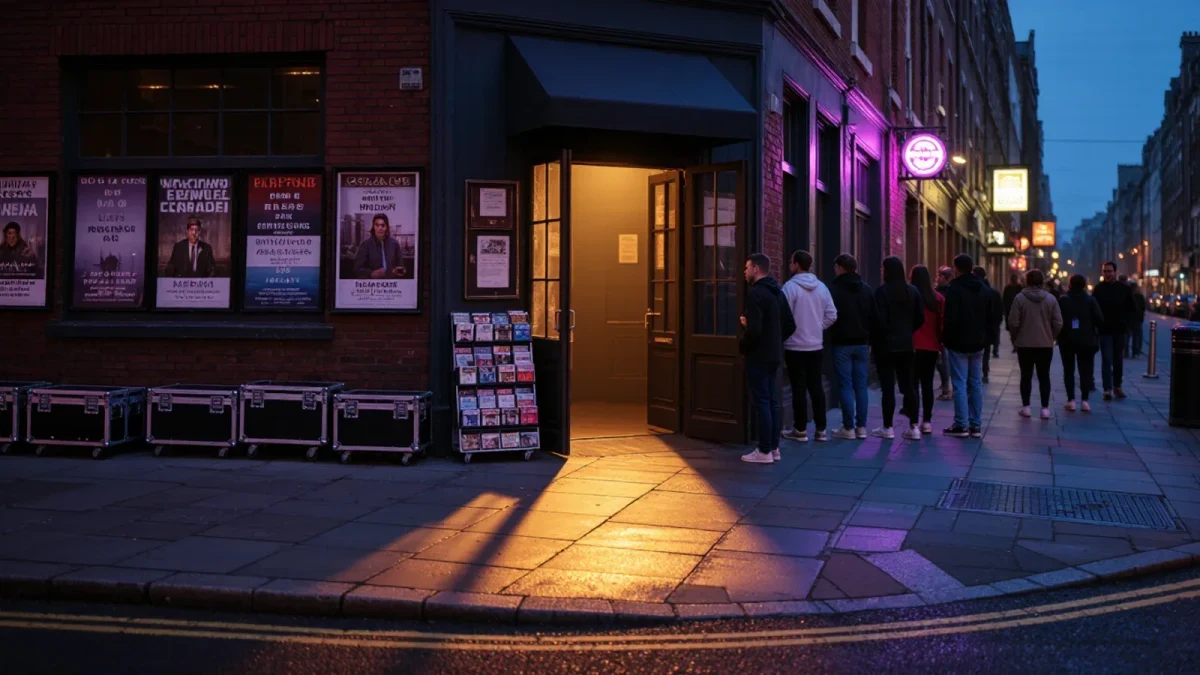
Start by narrowing to nights where you genuinely fit — same genre family, same tempo culture — because fit is the first thing a promoter checks and the first reason demos get deleted. Attend the night as a customer, more than once, so you understand its arc: what the warm-up plays, when the room fills, what the crowd dances to. That observation is the raw material of every pitch you will write.
Then make contact briefly and specifically. A short message — a few sentences, a link to one recorded mix that matches their night's sound, a clear statement that you are asking for a warm-up or early slot — outperforms every long CV. Name what you saw at their night; it proves you were there. Follow up once after a couple of weeks, then stop: persistence past two touches reads as pressure.
The demo itself deserves real craft. Thirty to sixty minutes, recorded in one take, programmed for their room — a warm-up-shaped demo for a night whose openers play warm-ups. Tracklists included, because promoters read them as a competence test. A downloadable file or private link, not a social reel. Most importantly: the demo's job is to prove fit, not to display range — sixty minutes across six genres tells a promoter only that you do not understand their night.
What role do residencies play?
A residency — playing the same night regularly, monthly or weekly — is the scene's true career engine. It converts one chance into twenty: you get repetition, which is how you actually learn to read rooms; you get a known audience, which lets you test material; and you get a home base that other promoters check when they google you. Most headline careers in club music trace back to a residency that compounded quietly for years.
Residencies also teach the unglamorous half of the job. Turning up on time, sharing the booth, playing the slot you were given rather than the set you wanted, being easy to work with when the night underperforms. Promoters move in tight circles and compare notes; a reliable resident's reputation travels faster than any single set.
Take the first residency even if the room is small and the fee is drinks. The compounding — skill, network, searchable proof — is the payment; the fee comes later.
When do you need a booking agency?
Agencies come into the picture when demand outruns your capacity to manage it. A booking agent sells you to promoters, negotiates fees and riders, handles contracts and the logistics of a touring calendar — typically for a percentage commission in the ten-to-twenty-percent range customary in the live industry. What they are not is a development service: agents represent artists whose bookings are already flowing, because their income is a share of your existing momentum.
The practical sequence: promoters start reaching out to you directly; dates conflict; fees need negotiating and you are losing gigs to calendar chaos. That is the signal an agent would amplify something rather than create it. Before that point, the work is yours — and it is the work above: nights played, rooms read, relationships kept warm.
When the time comes, choose an agent whose roster you respect and whose promoters you want to be in rooms with; an agency's reputation becomes yours in both directions.
What raises your booking value over time?
Audience first. A promoter books the cheapest credible way to fill a room, so anything that proves you move tickets — a real local following, a strong recorded-mix series, releases on labels the scene respects, a distinctive identity people can describe in a sentence — converts directly into fees. Recorded mixes and original music are the two assets that keep working while you sleep; a monthly mix series is the classic seed.
Reliability compounds the same way. Be the DJ who confirms fast, arrives early, plays the slot honestly and hands the booth over clean. Ask any promoter: given equal talent, they book the easier booking, every time. The scene's booking economics are not a mystery — they are a supply chain, and every link rewards the same two qualities: proof you fill rooms, and proof you are safe to work with. Build both, one warm-up at a time.