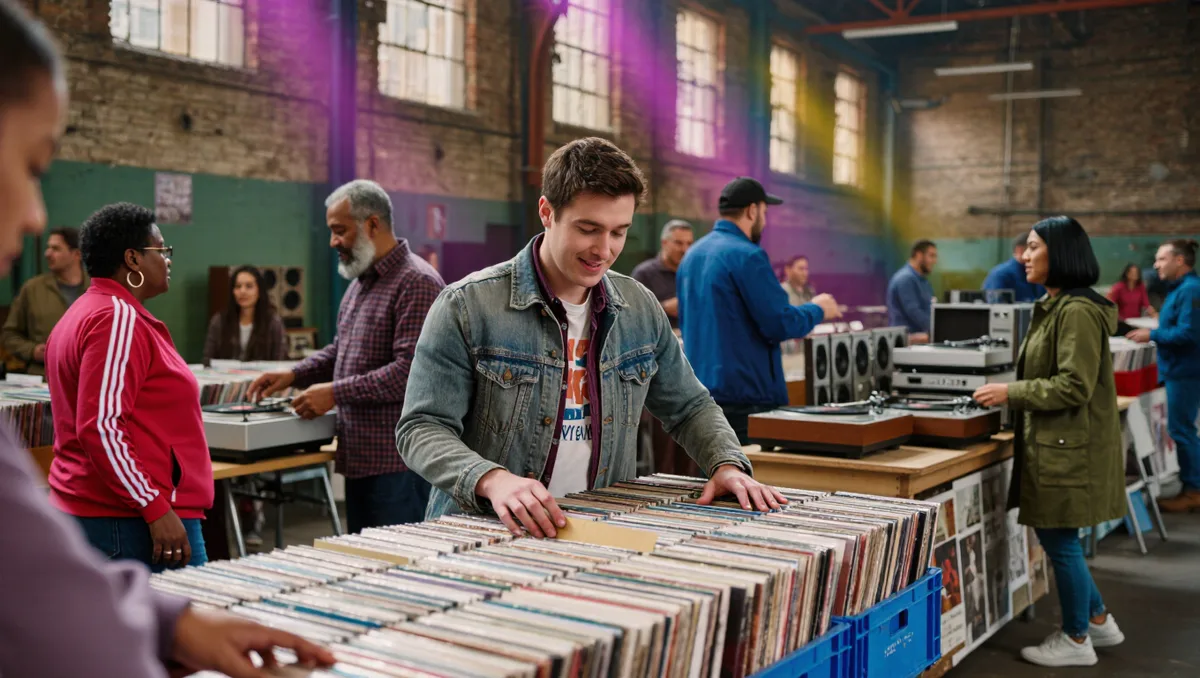
Vinyl is coming back because records now sell something streaming can't: ownership, sound you can hold, and a place in a collector culture that treats the object as the point. The revival is real, but it's uneven. Some of it is nostalgia, some of it is economics, and in dance music, some of it never actually went away.
A useful starting point is the word itself. According to Cambridge Dictionary, a resurgence is a renewal — a continuing after interruption, a restoration to use or acceptance. That fits vinyl precisely. The format never died; it retreated to the margins where DJs, crate diggers and independent labels kept the presses warm until everyone else caught up.
Cassettes ran a parallel, smaller revival. They're cheap to manufacture, cheap to sell, and they carry the same emotional charge: a physical thing you chose, paid for and keep. If you want the wider context of how the money moved, our explainer on How Streaming Changed the Music Industry: Royalties and Playlists Explained covers the royalty side in detail.
Why is vinyl coming back now?
The short answer: streaming made music feel weightless, and a lot of listeners wanted the weight back. When every track is instantly available, scarcity becomes the luxury. A record asks something of you — you flip it, you clean it, you commit to an album's running order. That friction reads as value in an age of infinite playlists.
Sound is part of the pitch, though it's often oversold. A well-pressed record played on decent gear genuinely sounds different from a compressed stream. But the honest core of the revival is ritual and ownership, not audiophile purity. People buy records because the record is the artifact, not the delivery system.
There's also a generational driver. Many buyers under thirty grew up entirely inside streaming. For them, vinyl isn't nostalgia — it's new. First albums get bought as posters for the wall that also happen to play.
What do collectors actually collect?
Collectors chase three things: rarity, condition and story. A rare pressing might be a limited run, a misprint, a promo copy that never hit shops, or a record that only sold a few hundred when it came out and now defines a genre. Condition is graded, and the grade moves the price. Story is the invisible tier — the Detroit techno twelve-inch that sold poorly on release because the scene it served didn't exist yet.
In electronic music, the collector economy runs on white labels and test pressings. A white label is an anonymous pressing, often with plain packaging and hand-stamped details, used to test a track or move it quietly before an official release. Our guide to White Label Vinyl: The Culture of the Anonymous Record unpacks how those records became collector grails.
DJ culture kept this whole market alive through the lean years. House and techno never stopped pressing vinyl because the booth demanded it — turntables were the instrument. When the broader market turned, the infrastructure was still there. Lineage matters here: the format survived because the people who needed it never left.
Why did cassettes come back too?
Cassettes solve a different problem. Pressing vinyl takes months and serious money; dubbing a tape run is fast and cheap. Small labels and underground artists use cassettes to put something physical on the merch table without betting the label's budget on a pressing plant slot.
Tapes also suit lo-fi and experimental scenes where the format's hiss and wobble are part of the aesthetic rather than a flaw. And they're giftable — a ten-pound object with real presence. The cassette revival is less about sound quality than about affordability meeting sentiment.
What this means for the scene
Our analysis: the physical revival is a barbell. At one end, big pop releases use vinyl as premium merchandise — colored variants, alternate covers, pre-order bait. At the other, tiny labels use tapes and short vinyl runs as identity statements. The middle of the market, the ordinary mid-price album, is where the revival is thinnest.
For dance music specifically, the revival reinforces something the scene already knew. The record bag is a resume. Digging through crates — physical or digital — is how taste gets built, and the physical version of that habit trains a patience that streaming skips. If you're new to how releases are structured, EP vs LP vs Single: Release Formats Explained is the primer.
The catch is capacity. Demand for vinyl now outruns the number of plants and presses that exist, which is why your pre-order slips. We've covered the mechanics in Vinyl Pressing Capacity: Why Your Record Waits Months.
Should you start collecting vinyl or cassettes?
Start with what you'll actually play. A starter turntable and ten records you love beat a hi-fi setup and a shelf of sealed speculative buys. Buy music first, investments second — most records are worth what they cost, and the ones that appreciate are unpredictable.
For cassettes, the barrier is lower still: any working Walkman-style player and a small label's Bandcamp page gets you going. Practical steps:
- Buy from the artist or label directly when you can — that's where the margin actually reaches the people who made the record.
- Check the pressing's condition grade before buying secondhand, and ask about storage.
- Store records upright, away from heat and sunlight.
- Follow labels, not just artists. A good label is a filter you can trust.
The evidence points one way: physical formats endure when they mean something. Vinyl and cassettes came back because a meaningful slice of listeners wanted music to be a thing again — something you own, file, lend and pass on. Streaming won convenience. The shelf won everything else.