Streaming changed the music industry by replacing ownership with access. Instead of buying an album once, listeners pay a monthly subscription or watch ads, and the money gets split out by how many times each track is played. The result: artists now earn per stream, playlists carry the promotional weight radio used to hold, and the catalog — not the new release — drives most of the income.
The shift hit dance music in its own way. A genre built on twelve-inch singles and DJ-only pressings suddenly lived inside the same apps as pop. Some of that opened doors. Some of it squeezed the people who make the music. Here is how the pieces actually work.
How does streaming actually pay an artist?
When you stream a track, the platform does not pay the artist directly. It pools subscription and ad revenue, then divides a large slice among rights holders based on each track's share of total plays. That is the pro-rata model, and it matters because your monthly fee does not go to the artists you actually play. It goes into one big pot, split by global popularity.
From that pot, money flows through a chain. The platform pays the distributor or label. The label pays the artist per their contract, often after recoupment — the label recovering its advance and costs from the artist's share first. A self-released artist keeps more of each payout but covers distribution, mastering, and marketing alone. A signed artist may see a smaller percentage but gets the label's push behind the release.
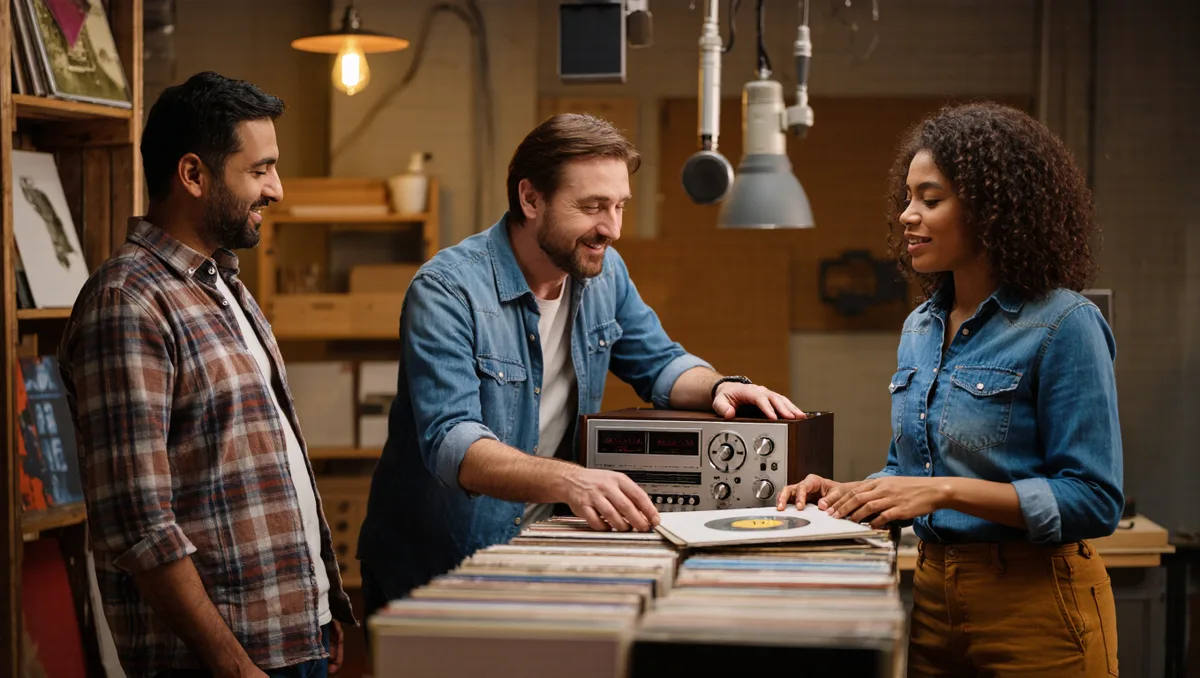
The practical upshot for the scene: a producer's streaming statement often reads like pocket change unless the track racks up serious volume. Which is why most working electronic artists still make their real money where streaming never reached — the booth, the fee, the merch table.
What did playlists do to music discovery?
Before streaming, discovery ran through record shops, radio, magazines, and the DJ booth. Now, editorial playlists and algorithmic recommendations sit at the front of the queue for a huge share of listeners. Getting placed on a big playlist can turn a bedroom release into a career. Getting skipped can bury it.
This concentrates gatekeeping in fewer hands. An A&R at a label used to sign what moved a floor. A playlist editor now shapes what millions hear first, and the algorithm learns from whatever those playlists push. For listeners it feels like endless choice. For artists, the top of the funnel got narrower even as the catalog got bigger.
Dance music kept some of its own filters. DJ pools, specialist charts, and the club circuit still break records that never touch a flagship playlist — the economy behind the Beatport top 100 runs on a different logic than a pop playlist, as we laid out in Beatport Charts Explained: The Economy Behind the Top 100. But the gravitational pull of the big platforms is real, and it shapes what even underground labels chase.
Why did streaming make old music more valuable?
Under the old model, a back catalog sat in a warehouse and earned nothing. Under streaming, every track is one search away, and a song from decades ago can out-earn last month's single. That flipped the industry's center of gravity from new releases toward catalogs.
You can see the knock-on effects everywhere. Investors buy the rights to legacy catalogs because predictable streaming income looks like rent. Labels reissue and remaster constantly, because an old track that lands on a playlist or a sync is found money. And classic dance records — once scattered across defunct labels and white labels — get hunted, licensed, and re-released, because someone finally worked out the archive pays.
For the scene, that cut both ways. Producers who never saw fair terms in the nineties now hold leverage if their catalog still moves. But tracks locked in rights disputes — clearance tangles we unpacked in How Remix Clearances Work in Dance Music — often stay off platforms entirely, invisible to a generation that only listens through apps.
What this means for dance and electronic artists
Streaming rewards volume and consistency. A steady drip of singles keeps an artist in algorithmic rotation; a long gap between releases lets the momentum drain. That pressure sits awkwardly with how electronic music actually gets made, where a record can take a year of studio nights and a DJ set can break it slowly, floor by floor.
So most working artists treat streaming as one leg of a stool, not the stool. The release feeds the playlist and the profile. The profile feeds the bookings. The bookings pay the rent. Vinyl, despite the pressing delays we covered in Vinyl Pressing Capacity: Why Your Record Waits Months, still sells because fans want something to own in an era when nobody owns the music they stream.
Our analysis: the artists who weathered the streaming era best are the ones who never depended on it. The genre's economics were always live-first. Streaming just made that fact impossible to ignore.
Is streaming good or bad for music?
Both, and the honest answer depends on which seat you sit in. For listeners, it is the best deal in the history of recorded music: nearly everything, instantly, for roughly the cost of one used CD a month. For hit songwriters and top producers, it created fortunes that radio-era royalties never matched. For mid-tier artists, it thinned out the income that album sales and radio once provided, and shifted power toward whoever controls the playlists and the platforms.
The same pattern runs through the wider streaming economy. According to PCMag, fast internet connections and a flood of streaming devices have accelerated the decline of traditional cable, with streaming services growing larger and more numerous — and, notably, increasingly expensive as the market matures. Music streaming tells a parallel story: cheap access won the audience, and the squeeze landed upstream on the people making the thing everyone consumes.
Where it goes next is genuinely unsettled. Artist payouts, per-user payment models, superfan tiers, and the role of AI-generated tracks in the catalog are all live arguments — the AI fight in production studios is one we tracked in AI Tools in Music Production: The Scene's Real Argument. What the evidence has established so far is this: streaming fixed distribution and broke the payment model. Nobody has finished repairing the second part.