An independent electronic record label is a small rights-and-curation business built on three functions: finding tracks, releasing them across digital and physical formats, and collecting the money those releases generate. Most run on staff you could count on one hand, and the label's real asset is not equipment but trust — a logo DJs recognize and a catalog listeners follow.
What are the core roles at an indie dance label?
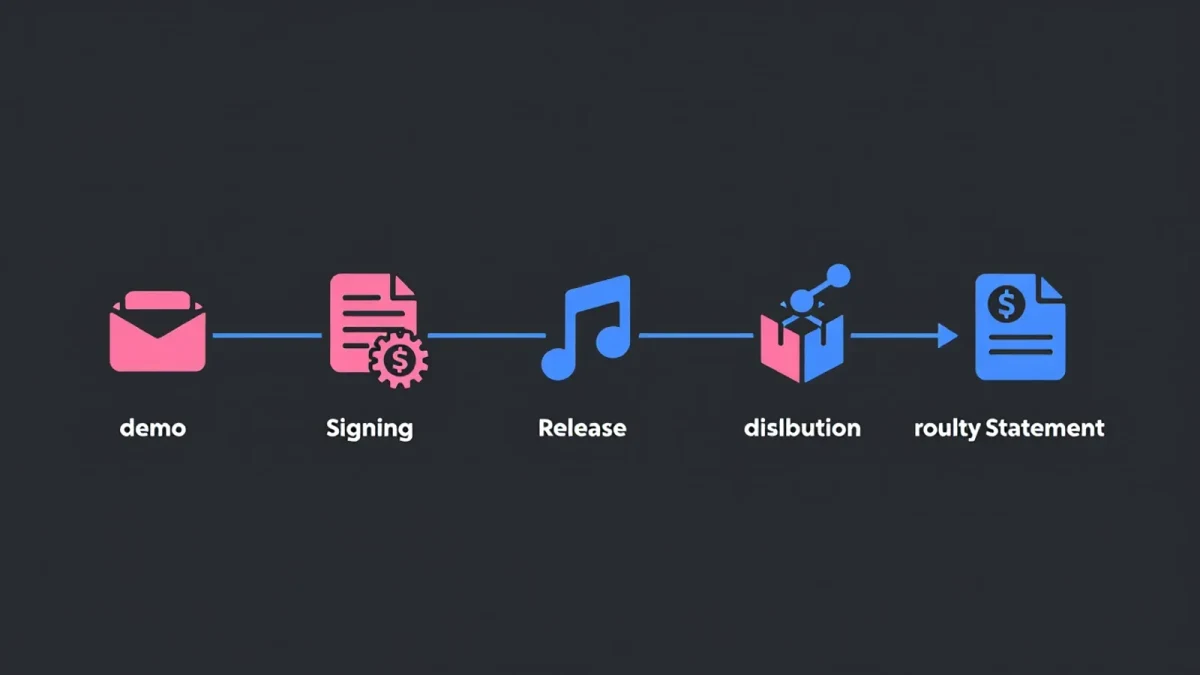
Even a two-person label performs five jobs, worn as hats rather than job titles. The A&R ear signs the music — at dance labels that usually means listening to demos, chasing tracks heard in club sets, and licensing finished recordings rather than developing artists from scratch. The release manager coordinates distributors, mastering, artwork and release dates. The promoter pushes singles to DJs, playlists and press. The royalty admin tracks splits, statements and payments. And the boss — often also the resident producer — makes the identity calls: what the label will not release matters as much as what it will.
How does a release make money?
Through four main streams, and the mix defines the label's business model. Streaming pays the smallest per-unit rate but the widest reach. Download stores geared to DJs, Beatport above all, pay more per unit and are the core revenue channel for club genres. Vinyl and merchandise carry the healthiest margins when a pressing sells through. Synchronisation licences — tracks placed in games, film and advertising — are the lottery ticket: rare, and transformative when they hit. A label with a strong vinyl base can survive modest streaming numbers; a streaming-only label lives and dies by playlist algorithm moves it does not control.
Who owns what when a label signs a track?
Usually a licence, not a purchase. The typical indie dance deal licenses the master recording for a fixed term — three to seven years is common — with the producer keeping ownership and the label taking an agreed share, frequently 50/50, of net receipts after costs. Exclusive artist deals exist at the bigger labels, but the scene's default currency is the single-track licence negotiated by email. Publishing is separate: unless the label is also a publisher, the songwriting copyright stays with the writer and their collection society. The split sheet — a simple document naming each contributor's percentage — is the industry's most basic protection, filled in before release rather than after the argument.
What does distribution actually do?
The distributor is the pipeline between the label and every store. Digital distributors — including long-standing players like LabelWorx, Believe's services arm and DistroKid for self-releasing producers — push metadata, audio and artwork to streaming services and download stores, then consolidate payments into monthly statements. Physical distribution handles pressing coordination and gets records into shops. In exchange they take a percentage, commonly in the 10 to 25 percent range depending on services included, or a flat per-release fee. The choice of distributor shapes everything downstream: which stores carry the catalogue, how fast statements arrive, and whether the label gets access to DJ pools and pre-save infrastructure.
How much does launching a release cost?
A minimal but serious release — mastered, distributed, lightly promoted — can ship for a few hundred euros. The realistic budgets look like this.
| Item | Typical range (indie, per release) |
|---|---|
| Mastering (2-3 tracks) | 90-300 EUR |
| Artwork | 0-400 EUR |
| Distribution fee/commission | 10-25% of revenue |
| DJ promo and mailing | 0-200 EUR |
| Vinyl pressing (300 copies) | 1,500-2,500 EUR |
| Music video | 0-everything |
The vinyl line is why so many labels ask for pre-orders before committing to a pressing: it converts the biggest fixed cost into a partly pre-paid one.
Why do so many producers start their own label?
Because the alternative is waiting. Established labels receive more demos than they can open, and a producer with an audience — even a small one — keeps a larger share of a smaller pie by self-releasing, while controlling the release calendar and the catalogue. The pattern repeats across the scene's history: from the Detroit and Chicago imprints of the late 1980s that sprang up because major labels would not touch house and techno, to today's Bandcamp-first operations run from a bedroom. The trade is simple and honest: full control and full workload, versus partial control and someone else's inbox deciding your fate.
How do labels use Bandcamp and direct-to-fan sales?
Bandcamp changed the economics of small electronic labels more than any platform since the download store. It takes a revenue share rather than owning the customer, lets labels sell music, merchandise and vinyl in one place, and pays on a friendlier schedule than streaming. For a genre with devoted collectors, the model fits: pay what it is worth, own the files, often with a lovely physical artefact attached. Many labels now run their entire physical operation through pre-orders there, pressing only what the first week of orders proves out.
The direct-to-fan channel also disciplines the rest of the business. A label that knows its Friday drop will sell two hundred vinyl copies to its own mailing list can negotiate distribution from strength, ignore playlist anxiety, and price records honestly. The newsletter — unglamorous, decades-old technology — has become the scene's most valuable marketing asset: five thousand people who asked to hear about releases beat a million passive followers every time a record goes on sale.
What kills small labels?
Three things, repeatedly. Catalogue debt: licensing deals that lapse into accounting obligations nobody tracks until a rights claim arrives. Vinyl gambles: a pressing that misses its sales window strands cash in cardboard. And founder burnout, the quiet epidemic — the job is five roles stacked on one person who also has a life. The labels that survive institutionalise early: standard licence templates, a distributor relationship with clean statements, a release budget written before the record is signed, and at least one other pair of hands. Romance signs the music; spreadsheets keep it alive.
The labels that last share one habit — they release less than they could. A catalogue is a reputation, and every record with the logo on it either builds that reputation or spends it.