A single is one track with room for remixes, an EP is three to five tracks that make one artistic statement, and an LP is a full album — but the streaming era has blurred all three, because platforms now classify releases purely by track count and duration. In electronic music the EP remains the working format: most club labels release almost nothing else.
Where do the terms EP and LP come from?
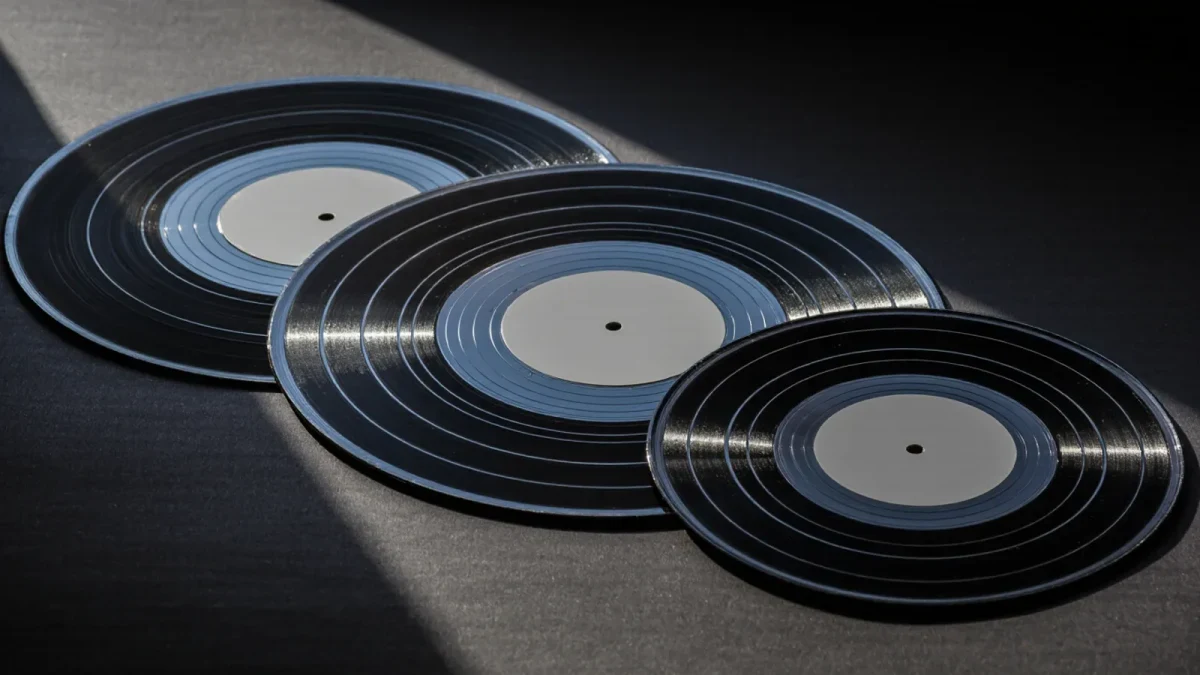
From vinyl physics. LP stands for «long play», the 33⅓ RPM 12-inch format Columbia introduced in 1948, which fit roughly 20-plus minutes per side. EP — «extended play» — named the awkward middle: more than a single, less than an album, classically a 7-inch or 10-inch at 45 RPM holding two songs per side. Those physical limits created the categories, and even though most releases are now files, the industry kept the vocabulary. When a label today says EP, it means the tradition of the format, not the plastic.
What counts as an EP in dance music?
Convention says three to five tracks and a total running time under 30 minutes. The EP suits electronic music structurally: two or three original productions plus one or two remixes is the standard package, giving DJs variation and giving the label a release substantial enough to carry a campaign. Streaming platforms formalised their own borders — Spotify, for example, classifies a release as an EP at four to six tracks with a total under 30 minutes — and those rules now decide how a release is displayed, banded and playlisted regardless of what the label calls it.
How do the formats compare?
The differences are practical, not just semantic.
| Format | Typical tracks | Typical length | Role in electronic music |
|---|---|---|---|
| Single | 1-2 (+ remixes) | Under 10 min | The club tool; the unit DJs buy |
| EP | 3-5 | 15-30 min | The label's standard release |
| LP / album | 8+ | 35+ min | The artistic statement; home listening |
Why does dance music favour the EP over the album?
Because the music's economics and its listening context both point that way. Club tracks are built for a DJ set, not a living room; a buyer needs the two tracks that work, not twelve. Digitally, the buyer can purchase exactly those two tracks, which makes packaging more tracks a bet on depth rather than a sales strategy. The EP also keeps a label's release rhythm alive — one every month or two — which is how imprints stay visible in charts, inboxes and racks. The album, by contrast, pauses that rhythm for a year of production and asks listeners to sit still for 45 minutes with music designed for movement. That is why so many great dance albums are, deliberately, not dance-floor records at all — ambient, home-listening, songwriterly work by producers stepping off the carousel.
What does an LP commit a dance artist to?
Time and a different kind of attention. A credible album needs a narrative arc, sequencing that works outside a set, and usually eight to twelve finished pieces rather than two bangers and filler. Labels treat it as a positioning move: the album says this producer is an artist with a catalogue, not a track-machine. The risk is that album tracks stream poorly against the singles that made the producer's name, and the compensation is press coverage, festival bookings and headline tours that singles alone rarely unlock. In the scene's received wisdom: singles pay the rent, the album builds the legend.
How did streaming change the definitions?
By making track count the only law. Platforms classify by their own rules — Spotify's EP border sits at four to six tracks under 30 minutes; anything longer is an album, and one to three tracks is a single. Billboard's album chart counts units by track-equivalent and streaming-equivalent conversions, which has pushed some acts to label 8-track releases «albums» for chart mechanics and others to drip singles instead. Meanwhile a release's physical form can contradict its digital classification freely: a «double EP» on two 12-inches reads as an album in the rack and as two EPs on a streaming profile. The vocabulary survives because it still communicates intent — and intent, not track count, is what a listener actually responds to.
What are the scene's in-between formats?
Dance music invented a whole vocabulary between the recognised categories. The double pack — two 12-inches sold together, usually four or five tracks — is an EP wearing album-width vinyl. The one-sided pressing puts a single track on a single side, a statement of confidence aimed squarely at DJs. The tool EP collects stripped-back, mixable versions of a label's recent output. And the mini-album — six or seven tracks, too long for an EP, too short for an LP — is where producers test whether they have an album in them before committing to the real thing.
Each of these exists for a commercial reason as much as an artistic one. A double pack moves more units per transaction at a better margin than a single 12-inch. Tool EPs resell the same masters with new utility. None of these labels changes what the music is — they change what shelf it sits on, who picks it up, and what a listener expects before the needle drops. In a genre where the package is part of the message, that expectation is part of the art.
How should a new artist choose their first format?
Almost always the single or the EP, and for two reasons. First, feedback: a short release teaches you how the market responds to your sound without betting a year of work on the answer. Second, catalogue: labels and bookers judge consistency, and three strong EPs across eighteen months say more than one uneven album ever could. The album can wait until you have something that only an album can say — at which point the format itself becomes the announcement, exactly as it should be.
Choose the format by what you want the release to do. One track that should reach DJs fast is a single. A statement that fits a peak-time slot and a B2B is an EP. Something you want people to hear on headphones, start to finish, is an LP — and in electronic music, that choice is the whole announcement.