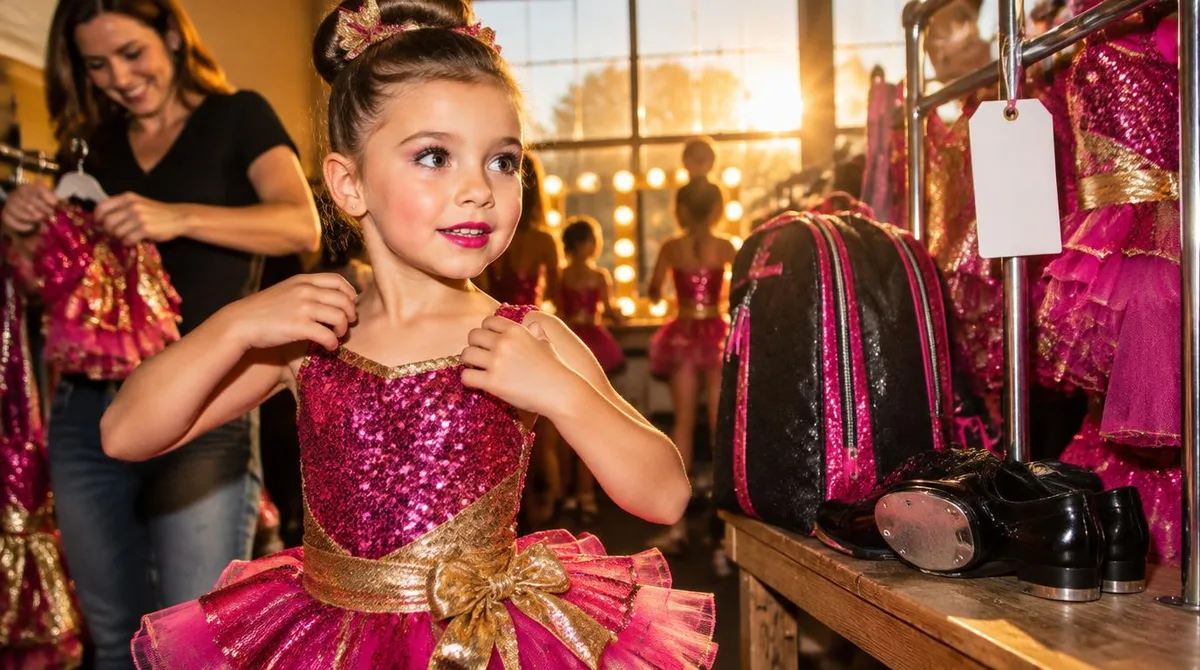
A dance recital is the end-of-year performance where students show families what they have learned in class. Getting ready comes down to four things: the costume, the hair and makeup plan, the logistics of the day, and keeping your dancer calm. Sort those early and the whole run-up gets easier.
The most important qualification: every studio runs its recital differently. Some hand you a full information packet months ahead. Others send a rushed email the week before. Your first job is to find out which one you have, because that decides how much of this guide you need to organise yourself.
What should parents do weeks before the recital?
Start with the paperwork. Most studios send a recital packet covering dates, call times, ticket sales and costume pickup. Read it the day it arrives and put every date in your calendar. Miss the costume order window and you are into scrounging territory, which nobody enjoys.
Check the costume as soon as it lands. Try it on your child at home, with the tights and shoes the studio specified. Look for loose sequins, a scratchy seam, a strap that slips. Fixing a costume two days before the show is stressful; fixing it three weeks out is a five-minute job.
This is also the moment to confirm the practical details with the studio directly: the venue address, whether dancers stay backstage all show or sit with parents between numbers, and what food and drink is allowed in the dressing rooms. Studios differ on all of these. Ask rather than assume.
If you are still weighing up studios for next year, our guide on How to Choose a Dance School for Your Child covers what to look for beyond the recital itself. And for the wider industry picture, the Dance News section tracks how the business behind these shows actually works.
How do you help a child practise without becoming the studio's enforcer?
Your job at home is not to teach the choreography. That is the teacher's job, and correcting steps you half-remember usually confuses more than it helps. Your job is to make practice easy and regular.
Clear a space where your dancer can run the routine without kicking the coffee table. Put the music on a playlist so it starts in one tap. Then step back. Ask them to show you the dance instead of instructing them through it — performing for an audience of one builds the exact muscle they will need on stage. Readers following this should also see Streaming Playlists and Electronic Music: Who Gets Paid?.
For younger children especially, rhythm is the foundation everything else sits on. According to wikiHow, dance instructor Jami Stigliano recommends starting with music you enjoy moving to, because you feel more confident and move more naturally when you are having fun — and finding the beat means listening for the drums or bass that carry the song's rhythm. That advice applies to recital prep too: a kid who can count along to the music at home is a kid who can find their marks even when the stage lights throw them off.
One more thing worth knowing: nerves shrink memory. A routine your child nails in the kitchen can wobble on stage. That is normal. Run the dance from the top a few times, then let it be. Over-drilling in the final week tends to breed the anxiety you are trying to avoid.
What goes in the recital day bag?
Pack the night before, not the morning of. A checklist taped inside a bag beats a frantic memory every time.
- Costume, plus a spare pair of tights — runs happen backstage.
- Dance shoes for every routine, labelled with your child's name.
- Hair kit: brush, gel or hairspray, pins, net, and any specified accessories.
- Makeup, if the studio calls for it, plus makeup wipes for after.
- Water and quiet snacks — dry ones, since costumes stain.
- A cover-up or robe to wear over the costume between routines.
- Something to do: a book, cards, a tablet with headphones for the long waits.
Label everything. Dressing rooms on show day are a sea of identical black leotards, and the lost-property pile at the end of the night is always bigger than anyone expects.
How does recital day actually run?
Expect a dress rehearsal, often the day before or the same afternoon. Treat it like the real thing: full costume, full hair, full focus. It is where the lighting cues, the spacing and the backstage flow get tested so show day runs smoother.
On the day, arrive at the call time the studio gave you — not five minutes after it. Backstage crews work to a tight running order, and a late dancer can push a whole number off schedule. Feed your child a solid meal a couple of hours before, since dressing-room snacking is chaotic at best.
Then hand them over and go find your seat. Most studios ask parents to leave the backstage area once dancers are checked in; volunteer chaperones handle the rest. Resist the urge to hover. Your dancer has rehearsed this. The best thing you can give them now is the sight of a familiar face in the audience, waving.
Photography and video rules vary by studio, and some ban flash or restrict filming to protect the choreography and the other families' children. Check the policy before you raise your phone. The professional photos and recordings many studios arrange are usually worth the wait anyway.
What this means for nerves — yours and theirs
Here is the part nobody puts in the packet: recital day is often harder on the parents than the dancers. You will feel every wobbly step in the wings from three rows back. Keep your face easy. A child who glances out and sees a parent looking worried learns to worry; one who sees a grin learns the stage is a good place to be.
Our analysis of what makes these days work is simple: the families who enjoy recitals are the ones who treated the prep as a project with a deadline, not a crisis. Dates confirmed early. Bag packed the night before. Practice done gently. Everything else is just sequins.
After the show, say thank you — to the teacher, the volunteers, the person running the music. These shows run on unpaid goodwill more than most families realise. And keep the programme. In a few years, that crumpled page with your child's name in small print will be the best souvenir in the house.
The takeaway for recital season
Recital preparation is mostly logistics with a little psychology folded in. Read the studio packet first, check the costume early, practise without pressure, pack the night before, and show up on time with a calm face. Do those five things and curtain-up becomes what it should be: your kid's moment, enjoyed by everyone including you.