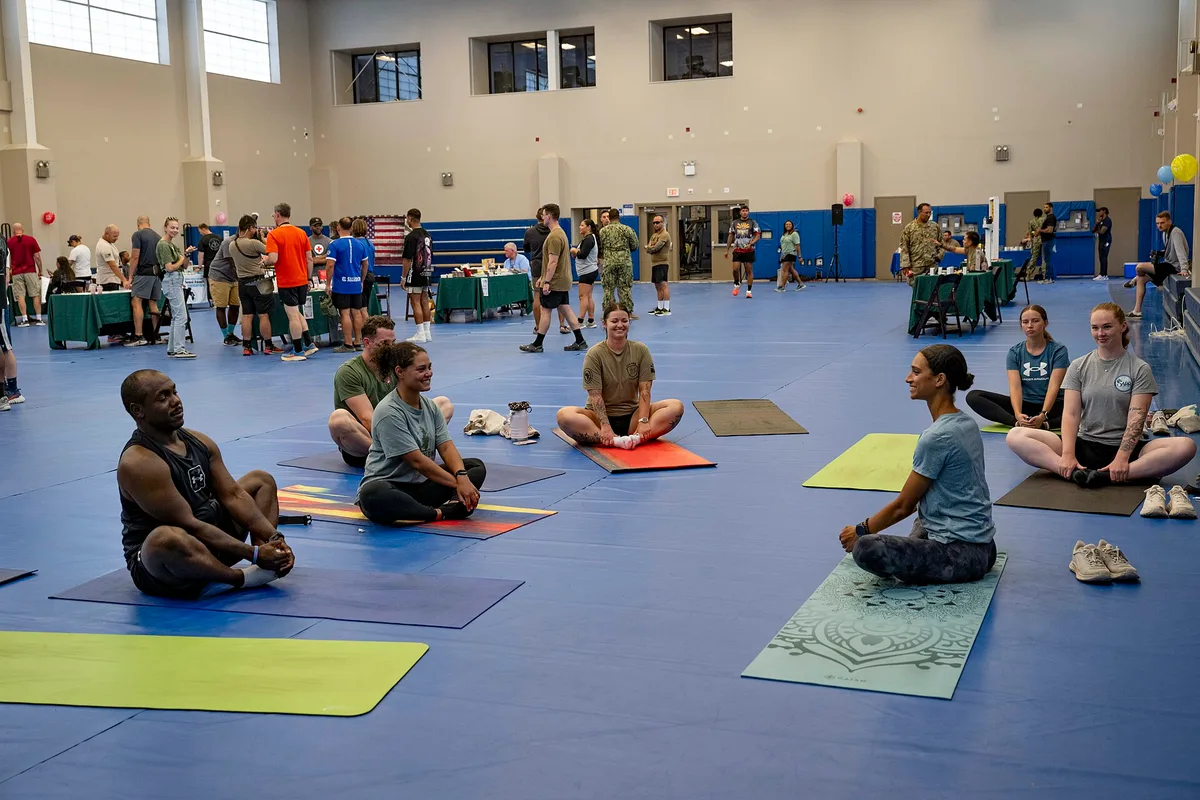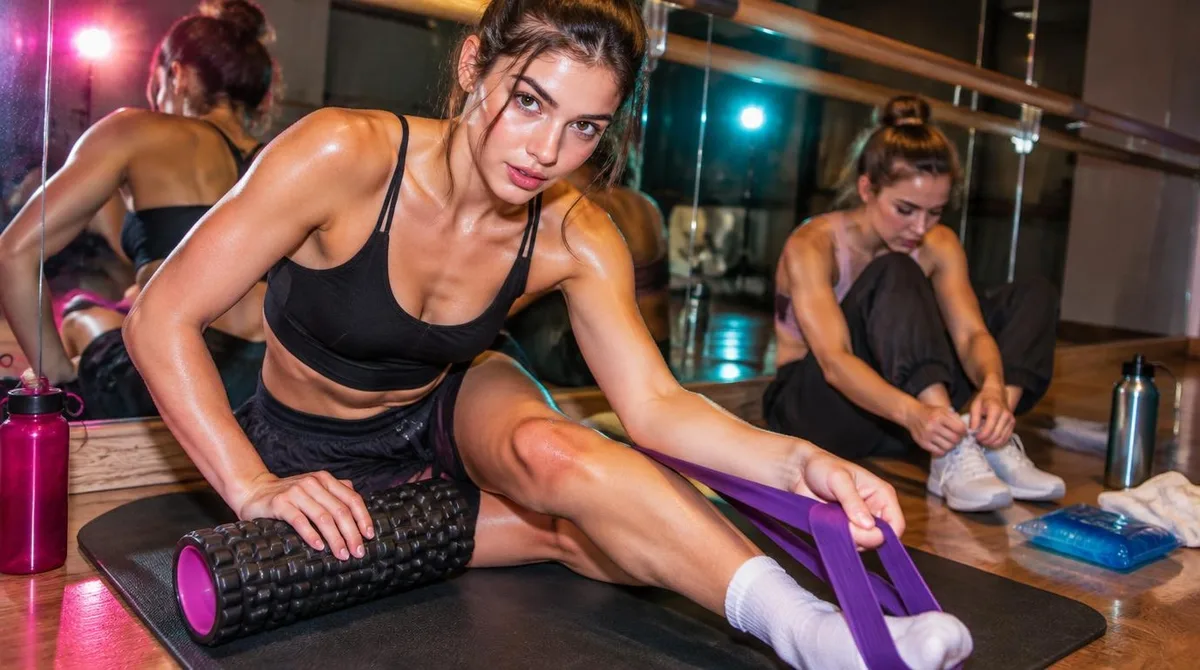
Dance injury prevention comes down to a small set of habits, repeated for years: a real warm-up before every session, strength work that supports the joints, enough rest between heavy days, and the discipline to stop when something hurts. Dancers who build those habits early tend to dance longer. Dancers who skip them tend to meet a physiotherapist eventually.
The qualification matters: no routine removes risk entirely. Dance asks the body to do things everyday movement does not — deep bends, repeated jumps, hours on the toes. But the studios that keep dancers working treat conditioning and recovery as part of the craft, not as time stolen from rehearsal. That mindset, more than any single exercise, is what separates a long career from a short one.
Why do dancers get hurt in the first place?
Most dance injuries trace back to a simple mismatch: the load the body takes exceeds the preparation it has had. Repetition is the usual culprit. A dancer runs the same eight counts until the muscles tire, and tired muscles stop absorbing shock properly, so joints and tendons pick up the slack. Fatigue, not one dramatic landing, causes a large share of overuse problems.
Technique gaps add to it. A landing with the knee collapsing inward, a spine that hinges at one vertebra instead of several, a foot that grips the floor instead of articulating through it — each multiplies stress on a small area. And then there is the culture of pushing through. Dance rewards stoicism, so minor niggles get danced on until they become major ones. The history of the art form shows how demanding it has always been: as Discover Walks notes in its roundup of the greatest dancers, Anna Pavlova mastered dancing on the tips of her toes and even designed a precursor to the modern pointe shoe — a reminder that the equipment and the body have always been asked to do extraordinary work (Discover Walks).
What does a proper warm-up actually do?
A warm-up raises the temperature of muscle tissue, increases blood flow and switches the nervous system on. Cold muscle is stiffer muscle, and stiff muscle tears. The practical version is simple: five to ten minutes of light cardio to raise the pulse, then dynamic mobility that mirrors what the class will demand — leg swings, hip circles, ankle rolls, gentle spine articulation.
Static stretching, the long-hold kind, belongs after dancing, not before. Holding a deep stretch on cold muscle temporarily reduces its spring, which is the last thing a jumper needs. Save it for the cool-down, when the tissue is warm and pliable and the long holds actually help flexibility settle in.
The cool-down matters as much. A few minutes of easy movement, followed by gentle stretching, helps the body shift out of effort mode and gives the dancer a quiet window to notice what feels off. Many overuse injuries announce themselves first as a faint ache in a cool-down, not as pain mid-leap.
How does strength work protect a dancing body?
Strength training is the quiet backbone of dance injury prevention. Strong glutes and hips keep the knee tracking straight on landings. A strong core lets the spine share load across its whole length instead of hinging at one point. Strong calves and feet spread the impact of jumps over muscle and tendon rather than dumping it into the ankle.
Studios that keep dancers dancing treat this work as standard. Cross-training — swimming, cycling, Pilates-style core work — builds the supporting cast that dance itself neglects, because dance is lopsided by design: it works some muscle groups relentlessly and others barely at all. Balancing that asymmetry is precisely what conditioning is for.
Perfectionism in technique is conditioning too. Fred Astaire built his screen career on what biographers describe as meticulous attention to detail, rehearsing until every step sat cleanly in his body — and clean technique is, mechanically speaking, the cheapest form of protection a dancer has (The Famous People). A well-aligned landing does more for a knee than any brace.
What should recovery look like between sessions?
Recovery is where adaptation happens. Muscle rebuilds between sessions, not during them, so back-to-back heavy days without a break stack fatigue on fatigue. Practical recovery is unglamorous: sleep, food, hydration, and at least one genuinely easy day in the week.
Load management also means varying intensity across a week. Not every class needs to be a maximal effort. Smart dancers periodise — hard technique days followed by lighter conditioning or rehearsal days — the same way athletes do. Young dancers juggling school shows and studio classes often have no easy days at all, which is worth watching. Parents preparing for performance season can find scheduling guidance in our Dance Recital Preparation Tips guide, and families weighing up a studio's approach to training can read How to Choose a Dance Studio for Kids before committing. Readers following this should also see Dance Recital Preparation Tips — Dance Recital Season: A Preparation Guide for Parents.
Soreness and injury are different animals. General muscle soreness after a hard class fades in a day or two and is normal. Sharp pain, pain that lingers, pain that worsens with each session, or pain that changes how a dancer moves — those are signals to rest and, if they persist, to get assessed by a professional. This article is general guidance, not medical advice; a qualified clinician should evaluate anything that does not settle.
What this means for dancers at every level
Our analysis of the mainstream studio guidance boils down to a short checklist a dancer can run without any equipment:
- Warm up dynamically before every class; stretch statically after.
- Build strength in hips, core, calves and feet, and cross-train to fill the gaps dance leaves.
- Plan at least one easy day per week and protect sleep.
- Land with control, and treat technique corrections as injury insurance.
- Tell a teacher about pain early. Small problems are cheap to fix; big ones are not.
None of this is glamorous, and that is the point. The dancers who last — the ones still moving decades after their first class — are rarely the ones who trained hardest on their best days. They are the ones who trained sensibly on all the other days. Conditioning is not a detour from dancing. It is what makes the dancing possible, year after year.
The long view: dancing for decades, not seasons
Injury prevention pays its real dividend over a career, not a term. A dancer who protects their joints in their teens is still performing in their thirties and teaching in their fifties. The list of greats is full of people who turned craft into longevity: Mikhail Baryshnikov moved from principal roles into directing major companies, and Misty Copeland, who started ballet at 13, rose to become the first African American woman promoted to principal dancer in American Ballet Theatre's 75-year history, per The Famous People's profile (The Famous People). Careers like those are built on bodies that were looked after. This connects to our earlier piece, Berghain Turns 20: What Two Decades of the World's Most Famous Club Built.
For readers following the wider scene, our Dance News section covers the business and culture side of dance, and the broader Festivals hub tracks where dancers and club crowds meet on the floor. The takeaway for any dancer, from a first recital to a professional contract, is the same: warm up, get strong, rest properly, and listen early. The body keeps the score either way — so keep the score low.