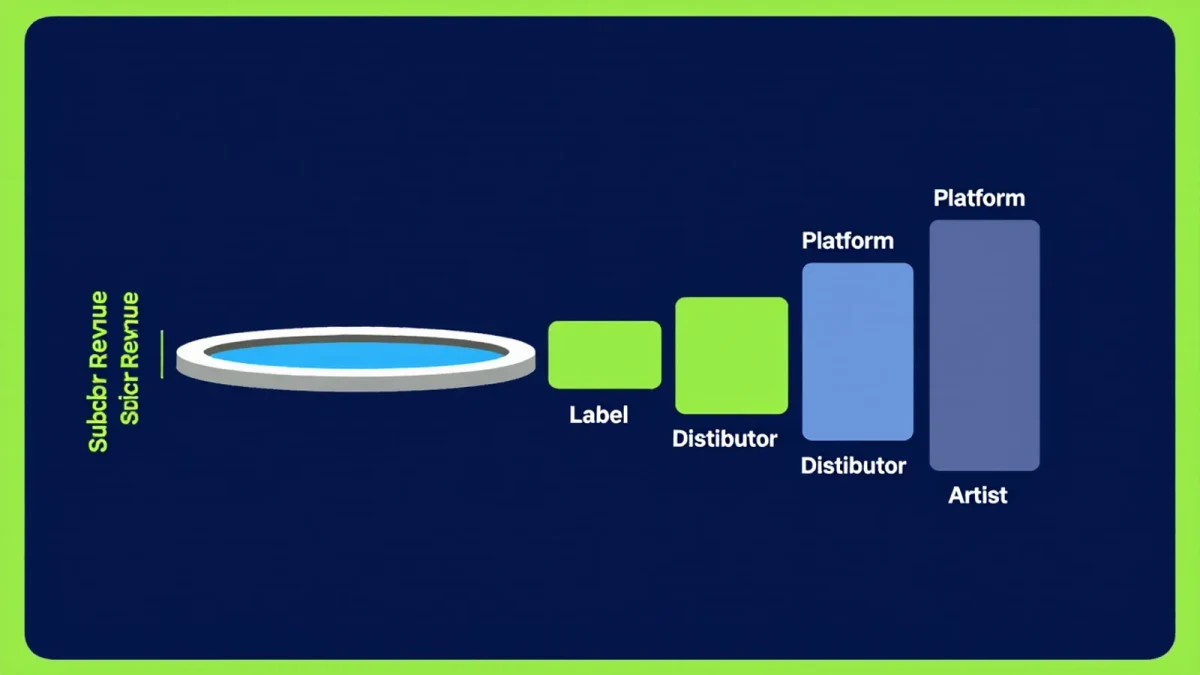
Streaming playlists pay electronic artists through the same pro-rata pool as everyone else: subscription and ad revenue goes into a pot, and rights holders receive a share based on their fraction of total streams — a per-stream rate that has hovered around a fraction of a cent for years. What has changed is who decides what gets heard. A handful of editorial playlists at Spotify, Apple Music and Amazon Music, plus algorithmic feeds like Release Radar and Discover Weekly, now function as radio did for previous generations — and in dance music, where a single track can be streamed half a billion times off one placement, playlist economics shape which sounds break.
How does playlist placement actually pay?
Through the platform's royalty pool, split between recording and publishing. A track on a 50-track editorial playlist with a million followers can generate tens of millions of streams in a month; at typical per-stream rates, the recording-side payout is real money — but it flows to whoever holds the rights. An independent artist keeping their masters might take the bulk of it; the same track signed to a major under a standard royalty deal might deliver the artist a tenth or less after recoupment. The playlist pays the rights, not the person. That distinction defines modern electronic-music economics.
Who curates the playlists that matter?
Three layers. Editorial teams — salaried curators at the platforms — build flagship lists like mint (Spotify's dance flagship) or Apple Music's dance playlists; placement there is pitched through labels, distributors and pitch tools weeks before release. Algorithmic playlists — Release Radar, Discover Weekly, daylists — respond to early listening data, which is why release-week momentum matters so much in dance music. And third-party playlist curators, from Dance Party to thousands of smaller independent lists, trade on follower counts; some operate legitimately, others sell placements, which violates platform rules and does nothing for an artist's algorithmic profile if the listeners skip.
Why does dance music fit playlists so well?
Genre function. Dance tracks are mood-functional — workout, focus, pre-game, commute — and the biggest electronic playlists are activity playlists, not artist playlists. A listener who streams mint does not care who made track seven; they care that it hits at 126 BPM. This rewards producers who master the format: strong intros that survive a skip decision, no long breakdowns, vocal hooks inside the first 30 seconds. It also warps the art — the streaming edit of a club record, cut to 2:30 with the drop moved forward, is now a standard deliverable alongside the club mix. The 8-minute journey track, the foundation of progressive house and techno, is structurally penalized by a system that pays per completed stream.
What does a million streams actually earn?
At commonly cited per-stream rates for recordings — fractions of a US cent, varying by platform, country and subscription mix — a million streams generates a few thousand dollars on the recording side before splits, plus a smaller publishing share. Split that with a label, distributor cut of 10-15%, a publisher and any collaborators, and the artist's take shrinks fast. This is why the working economy of electronic music still runs on the things streaming cannot commoditize: DJ fees, live shows, merch, sample packs, and — increasingly — vinyl and Bandcamp sales where fans pay real money directly. Streaming is discovery and scale; touring is the income.
How is the system changing?
The platforms are reworking the pool. Spotify's move toward a minimum stream threshold before a track earns royalties at all — filtering tracks with negligible plays — redistributes fractions of a cent toward bigger catalogs, a change aimed at waste that also squeezes long-tail electronic producers. User-centric licensing, where your subscription money goes only to what you personally stream, keeps resurfacing in industry debates as the fairer alternative, though no major platform has adopted it at scale. Meanwhile the promotional market has professionalized: pre-save campaigns, release-day ad buys and pitch pipelines are now standard label machinery, which favors organized teams over bedroom producers with one great track.
What should an electronic artist actually do?
Play the system without letting it write your music. Pitch every release through official platform tools weeks ahead; build pre-saves; release consistently, because algorithms reward cadence; make the streaming edit as well as the club mix. But treat playlists as marketing spend, not income: the money a million streams generates is a fraction of one mid-level club booking. The artists thriving in the playlist era use streams to fill the room, then charge the room.
What is the difference between editorial and algorithmic placement in practice?
Control and consequences. An editorial placement is a decision by a named platform team, made before release, that lasts as long as the curator keeps the track on the list — it delivers a concentrated burst of streams and a credibility signal that travels: bookers, labels and other curators check flagship lists. An algorithmic placement is arithmetic, not taste: the system notices early listening behavior and feeds the track to profiles statistically likely to finish it. Algorithmic placement can out-scale editorial over time, but it is fragile — it decays the moment skip rates rise, and nobody to appeal to. The two feed each other, which is the real playbook: editorial muscle in week one generates the listening data that switches the algorithms on, and the algorithmic tail carries the track long after the curator has moved on.
How does a label pitch a dance track to playlists?
As a scheduled operation, not a hopeful email. The standard sequence:
- Release locked and uploaded weeks ahead, because pitch tools only work while the track is unreleased.
- Official pitch submitted through the platform's tools, with genre tags, mood descriptions and the story written for a curator who has ninety seconds.
- Pre-save campaign pushed through the artist's channels to concentrate release-day listeners.
- Supporting edits — the short streaming version, clean versions, maybe a faster or slower alternative mix — delivered so curators can fit the track to different lists.
- Release-week monitoring, feeding early numbers back to distributors who lobby for additions.
Every step favors teams with staff and calendars. A self-releasing producer can copy the skeleton — pitch early, gather pre-saves, have the edit ready — but the machinery itself is the label's quiet advantage.
What about short-form video as a discovery channel?
It now sits upstream of the playlists. A clip that works on short-form video drives people to streaming platforms to find the full track, and that search-and-play surge is exactly the early engagement signal the algorithms read. Labels have responded by treating the sync point — the fifteen seconds of a track chosen for clips — as a creative deliverable near the level of the hook itself. For dance music the fit is natural: drops are inherently visual-event moments, and club footage travels. The caution is the same one playlists taught: writing for the skip decision shrinks the form. A producer structuring a record around its clip-able second is answering the same incentive that cut the streaming edit to two and a half minutes.
FAQs
How much does a playlist stream pay?
Typical recording-side per-stream rates are a fraction of a US cent, varying by platform, country and listener's subscription. A million streams yields a few thousand dollars before label, distributor and publisher splits.
Can you pay to get on a Spotify editorial playlist?
No — editorial placement cannot be bought, and third parties selling placements violate platform rules. Legitimate routes are official pitch tools, distributors and label pitching weeks before release.
Why do dance tracks have short streaming edits?
Because playlists reward completed streams: short edits with early hooks reduce skipping and raise the streams that feed algorithmic placement, so labels deliver streaming edits alongside full club mixes.