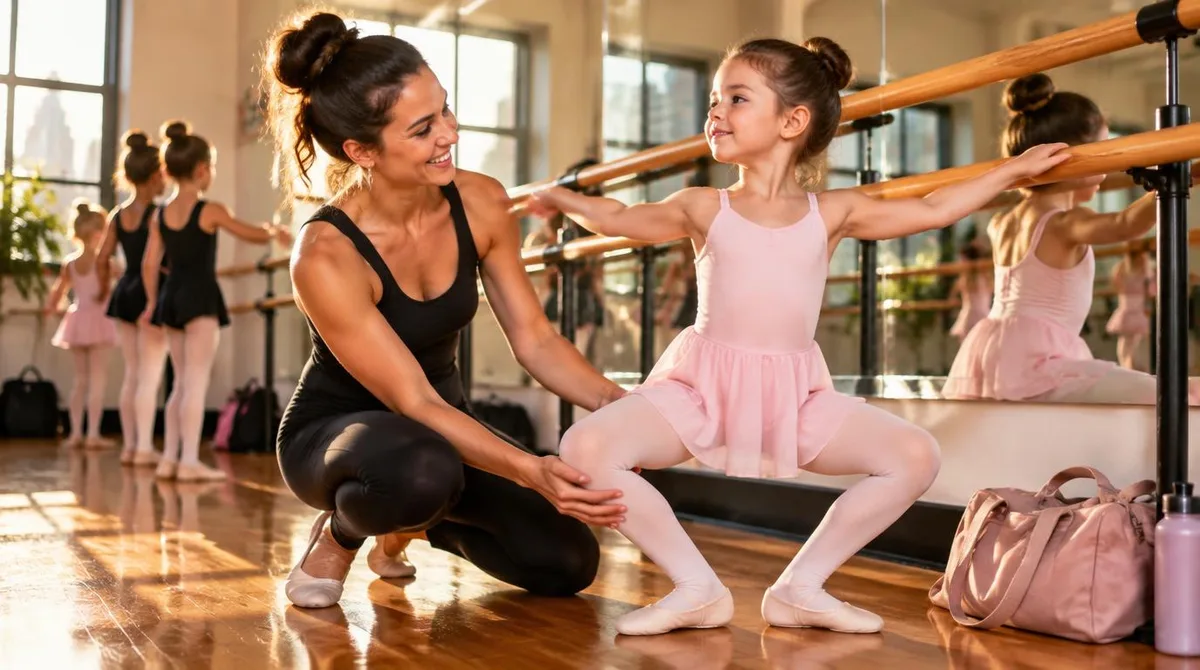
Choosing a dance school for your child comes down to three things: who is teaching, what the classes actually expect of a young body, and whether the studio is honest about its own limits. Get those right and almost any style — ballet, hip hop, contemporary — can be a good start. Get them wrong and a child can spend a term learning bad habits in a room that runs on pressure rather than joy.
The word itself is doing work here. Dictionary.com notes that choose is the present-tense form of the verb, the act of picking from several options — which is exactly the position you are in, in the present, before any term fees are paid. Once you have chose a studio, the decision is made; the checking happens now. So treat this as a shopping trip with stakes, not a formality.
What follows is a practical walkthrough: what to look for in a teacher, how class structure differs by age and style, the questions to ask on a trial visit, and the red flags that should end the conversation. Nothing here requires dance training on your part. It requires attention.
What should you look for in a teacher?
Start with the person at the front of the room, because they shape everything. A good children's dance teacher has three qualities, and only one of them is dancing ability.
- Teaching craft. Watch how they correct a child. The best teachers give one clear note at a time, in language a seven-year-old understands, and never single a student out for humiliation.
- Age-appropriate expectations. Young bodies are not small adult bodies. A teacher who drills deep stretches or heavy repetition on small children is borrowing against their joints.
- Real credentials, stated plainly. Ask where they trained and what they teach from. A confident answer is a good sign; vagueness is not.
Sit in on a class if the studio allows it, or watch the final ten minutes. You are looking for order without fear: children listening because the room is engaging, not because they are scared of the answer.
How do class types differ, and which fits your child?
Studios usually sort classes two ways: by style and by age. Style is the fun part. Ballet builds posture, control and the vocabulary most other training borrows from. Hip hop and street styles build musicality and confidence fast, and they tend to be the entry point kids ask for by name — the same pull that drives the wider electronic and club culture this magazine covers. Contemporary sits between the two and rewards kids who like to move big. Readers following this should also see Berghain Turns 20: What Two Decades of the World's Most Famous Club Built.
Age matters more than style. Under-sevens need play-shaped classes: short attention blocks, games that disguise technique, no pressure to perform. Eight-to-twelves can handle real structure and start to benefit from it. Teens need either a serious track or a social one, and a good studio offers both without sneering at either — genre gatekeeping has no place in a children's studio any more than it does on a dancefloor.
Ask what a typical class looks like minute by minute. If the answer is a warm-up, a skill block, and a short creative section, that is a healthy shape for almost any age.
What questions should you ask before enrolling?
Bring a short list and ask it directly. Any studio confident in its own operation will answer without flinching.
- Who teaches, and what are their qualifications? Get names, not just "our staff".
- What are the class sizes? A small class means individual correction; a hall of thirty means your child is background texture.
- What are the fees, honestly? Tuition, costume costs, exam fees, recital tickets. Ask for the full-year number, not the monthly one.
- How are performances handled? Recitals are highlights for some kids and nightmares for others. Ask whether performing is optional.
- What is the observation policy? Studios that hide parents entirely deserve a second question.
Then do the trial class. Most reputable studios offer one, and how the front desk treats that request tells you a lot about how they treat everything else.
What are the red flags?
Some warning signs are practical, some are cultural, and the cultural ones matter more.
Practical first: no clear fee structure, teachers who cannot name their own training, classes where very young children are pushed into extreme flexibility work, and a schedule that seems designed to keep you paying rather than progressing. Also listen for pressure — "sign today or lose the place" is a sales tactic, not a studio policy.
Culturally, watch for a fixation on competitions above all else. Competing can be wonderful for the right child, but a studio that measures every student against trophies will make the non-competitive ninety percent feel like failures. Watch for body talk, too. Any comment about a child's weight, shape, or "needing to lean out" is a walk-out signal, full stop. And watch the seniors: if the most advanced students look exhausted, miserable, or terrified of their teacher, your child is looking at their own future.
How does the wider dance world shape what studios teach?
It is worth knowing that children's studios sit at the base of a large professional economy. The commercial side — agents, fees, touring — runs on the same training pipeline your child would enter, and understanding how that trade works can help you judge whether a studio's promises are realistic. Our explainer on How DJs Get Paid: The Fee Economy Explained covers one corner of it; the performing side has similar economics, with similar gaps between the glamorous top and the working middle.
That context should temper expectations, not kill enthusiasm. Dance training pays off in coordination, discipline, musicality and friendships whether or not a child ever stands on a stage. Studios that sell a professional career to every parent are selling something they cannot deliver.
What this means for your decision
Our analysis, reading across the guidance above: the studio's culture outranks its style list, its mirrors, and its trophy case. A modest room with a patient, qualified teacher beats a gleaming facility with a hard-sell front desk every time. Visit at least two studios, take the trial class, ask the fee question until you get a straight answer, and trust what you see in the last ten minutes of a class — that is when the real teaching shows.
One last note on the grammar of the thing, because it tracks the decision itself. As the learning site 5 Minute English explains in its guide to the word family, choice is the noun — the option you picked — while choose is the act of picking. Your choice of studio is the noun. The choosing, the visiting and the asking, is the part that gets you there well.