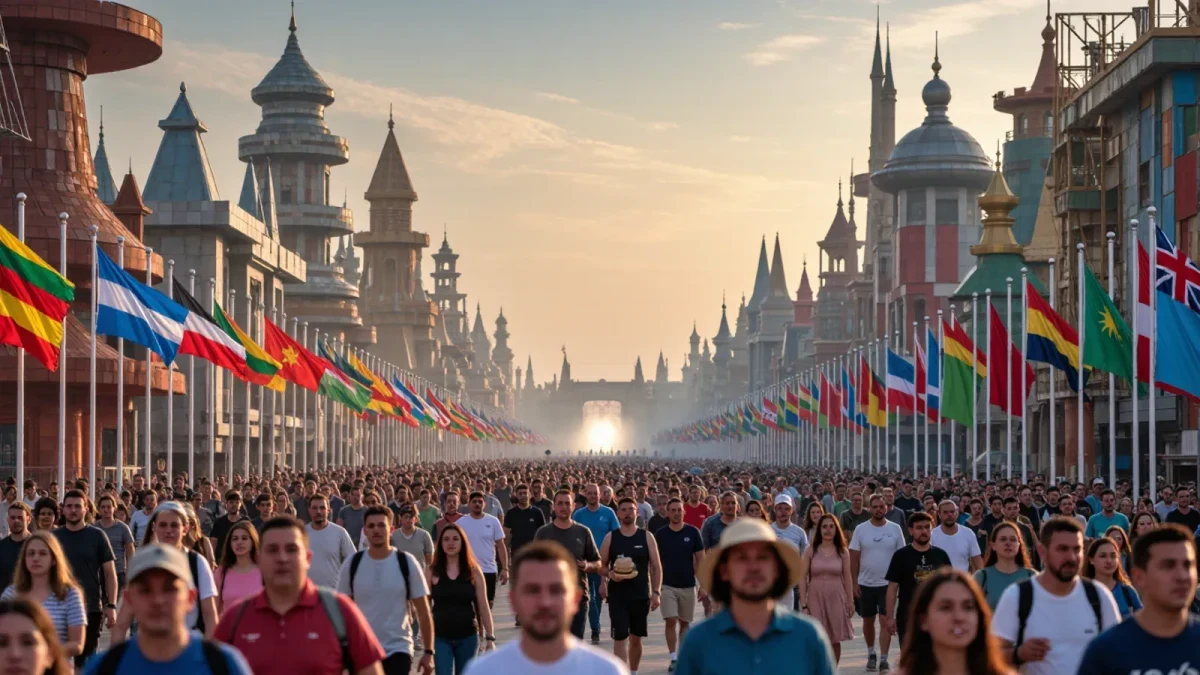
A mega-festival is a temporary city that happens to have a soundtrack. Tomorrowland, the Boom, Belgium-based reference point of the format, runs across two July weekends, sells roughly 400,000 tickets per edition and turns a recreation area in a Flemish town of 18,000 residents into one of the densest gatherings in electronic music — per the festival's own published editions through 2025. This explainer covers how these giants are built, from theme years and global ticket sales to the camps, money and logistics that keep a city of hundreds of thousands functioning for two weekends. Figures are drawn from organizers' own published editions as of April 2026 and are subject to change.
Mega Dance publishes information, not travel or purchasing advice — ticket and travel decisions are yours.
What makes a festival a mega-festival?
Three thresholds, roughly. Scale: attendance in the hundreds of thousands across one edition, usually split over two weekends. Duration and infrastructure: not a field with stages but a constructed environment — themed builds, its own camping city, internal transport, hospitals and a round-the-clock staff. And global sales mechanics: tickets sold through worldwide pre-sales and global journey packages to a genuinely international audience, with dozens of nationalities on site. Tomorrowland set the modern template; the format's cousins across Europe and beyond share its mechanics in different proportions. The distinction matters for attendees: at this scale you plan like a traveller, not a gig-goer.
How does the two-weekend format work?
Splitting one festival into two identical July weekends — Tomorrowland's model since 2012, per the festival's published history — doubles effective capacity on the same site within licensing limits and concentrates the demand that would otherwise overwhelm a single weekend. The two weekends book substantially the same headline framework with differences buried in the undercard and stage hosts, which is why superfans buy both. Operationally it means two full build-ups, two breakdowns and a mid-season reset week in which the site transforms back to day one. For you it means one decision early: which weekend, and the honest acknowledgement that tickets do not last — global pre-sales for the reference events have sold out in minutes-to-hours in recent editions per organizers' own statements.
What is a theme year and why does the whole site follow it?
Since 2005, Tomorrowland has built each edition around a single narrative theme — from «Tomorrow» storylines to the 20th-anniversary «Life» edition in 2024, per the festival's published announcements — and every layer of the production obeys it: stage design, the main stage megastructure, merchandise, the film content on the screens, even camp architecture. The theme is the product differentiation: no other festival can be this year's edition of this story. It's also why the main stage build is a months-long construction project that gets dismantled into legend afterward. Other giants have copied the logic — a signature visual identity renewed annually — because in a crowded market the build is the brand.
What is a festival camping city?
DreamVille, Tomorrowland's on-site accommodation, is the fullest expression: a several-day camping township for tens of thousands of visitors with its own marketplace, food court, stages, radio station, showers, ATM zone and accommodation tiers from basic pitch to pre-built lodges, opening days before the festival proper — per the organizer's published site information. The camping city exists because the event's scale outruns regional hotel capacity many times over, and because the pre-party economy is itself part of the product. Book it like accommodation, not an afterthought: tiers differ enormously in comfort and price, and the good ones sell out on the same clock as the tickets.
How do you actually get tickets to a mega-festival?
Through a funnel designed to be survived, not enjoyed. The sequence for the Belgian reference event, per its published sales mechanics: register in advance for the ticket sale, enter the online waiting room at the appointed hour, and compete in a global queue with hundreds of thousands of registered buyers. Demand in recent editions has exceeded 400,000 tickets against a supply sold in minutes-to-hours per organizer statements. Survival rules: register before the window, decide your package tier in advance, coordinate a group with each member ready on separate devices, and treat the official resale platform as the ethical fallback — never street resale, which is where fraud lives. Global journey packages with travel and accommodation bundled are the highest-probability legitimate route for international buyers.
What does it cost and what is the money buying?
Full weekend passes for the reference event have run in the low-to-mid hundreds of euros plus camping or accommodation tiers in recent editions, with global travel packages running well into four figures per person — per published pricing through 2025, subject to change. What the ticket buys is not just the lineup but the construction: themed megastructures, a site-wide production standard that smaller festivals physically cannot lift, and the compounding effect of an audience assembled from the entire planet. Whether that trades against the intimacy of a 5,000-capacity event is a genuine question of taste, not a ranking — the two experiences are different products that share a word.
How do hundreds of thousands of people move through one site?
Slowly, by design. Mega-sites deploy hardened logistics: shuttle train platforms and dedicated stations — Tomorrowland operates its own station infrastructure with the national rail operator for event weekends per organizer and rail operator information — park-and-ride zones, colour-coded camping zones, signed internal routeways and staggered entry flows. The attendee tactics that work: arrive a day early, leave a day late, never leave at the headliner's final track with everyone else, and learn the site's back routes by day two. At this scale the queue is a schedule feature, not a failure — build it into the plan instead of resenting it.
Is the mega-festival experience worth it?
For spectacle, production ceiling and the once-a-year density of an international crowd, nothing at festival scale matches it. For musical depth per hour, the second stages of mid-size festivals compete hard — the giant's headline slots are engineered for its broadest audience. The honest answer for a first-timer: go once, plan the undercard as carefully as the headliners, treat the camping city as half the event, and understand the tradition of the closing fireworks as the real encore. The mega-festival sells a memory of scale. It delivers exactly that.
Practical details: planning a mega-festival trip
Reference event: Tomorrowland, De Schorre recreation area, Boom, Belgium; two July weekends.
Scale: ~400,000 tickets per edition; DreamVille camping township opens before the festival weekend, per organizer information through 2025.
Tickets: advance registration required; recent editions sold out in minutes-to-hours; official resale and global journey packages are the legitimate fallbacks.
Costs: weekend passes in the low-to-mid hundreds of euros plus accommodation tiers, travel packages into four figures per person, per published pricing through 2025 — all figures subject to change as of April 2026.