A day festival gives you the music and sends you home to a mattress; a camping festival gives you the world and takes your sleep. That's the honest core of the day festival vs camping festival choice: day events trade immersion for recovery, camping events trade comfort for a completely different kind of experience — the 4 a.m. stage, the campsite community, the slow Sunday morning that day-trippers never see. This guide compares the two on cost, energy, music depth and logistics so you can pick per event, not per identity. Details reflect European festival practice as of July 2026.
What's the real difference in experience?
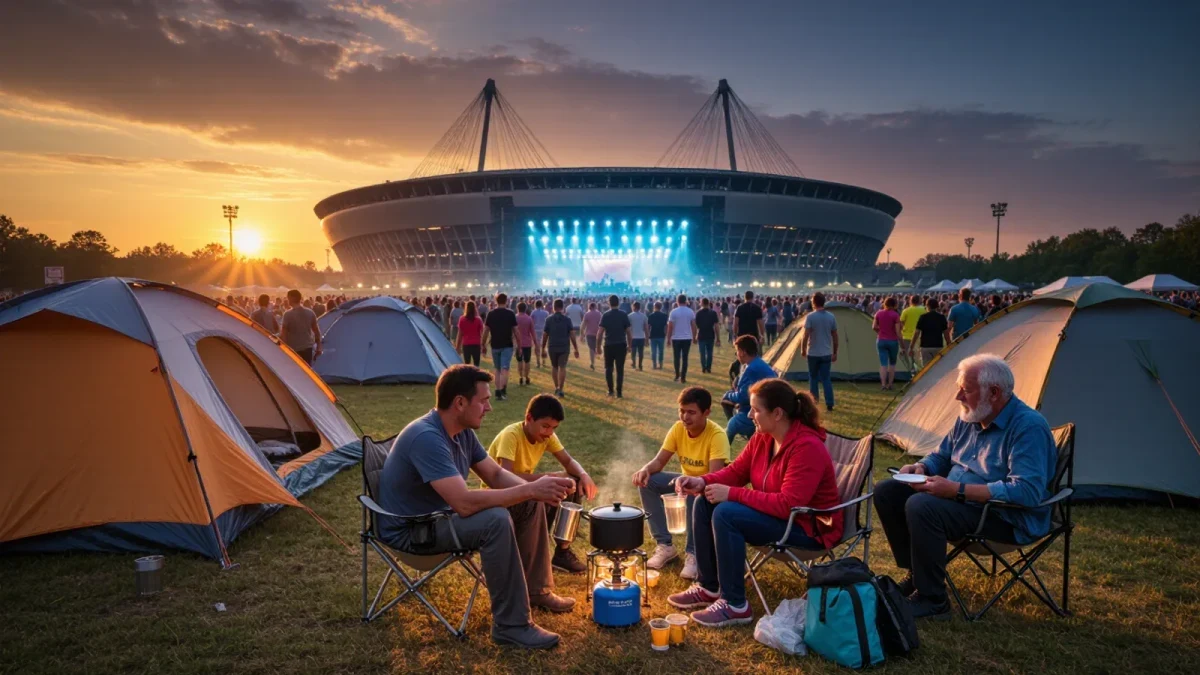
Rhythm. A day festival is a sprint: you arrive, you have eight to fourteen hours, every set choice is final, and you leave when the closer ends with the whole event behind you. It concentrates attention — you research the lineup, you plan the clashes, you see the acts you love. A camping festival is a residency: three to five days on site, where the pressure to see everything dissolves because everything is a walk away, and the best moments are frequently the unscheduled ones — the sunrise set you didn't plan, the neighbouring camp's soundsystem, the 11 a.m. disco you wandered into with a coffee. Day festivals optimize the night. Camping festivals optimize the weekend. Neither is the better festival; they are different products sharing a word.
How do the costs compare?
The sticker price lies in opposite directions. Camping tickets look more expensive but include your accommodation: at typical European electronic festivals as of the 2025-2026 season, a camping weekend pass plus pitch often totals less than the same event's day passes plus even two hotel nights — urban hotel pricing during festival weekends inflates fast. Day festivals hide their costs in the logistics around them: transport home at 2 a.m., the hotel or long-night travel, the taxi surge that city events create. The full-accounting pattern: for multi-day events near cheap camping, camping wins on money; for single-day events in cities with good night transport, the day ticket wins outright. Budget the total weekend, not the ticket, and the right answer usually announces itself.
| Factor | Day festival | Camping festival |
|---|---|---|
| Ticket covers | Entry only | Entry + accommodation |
| Hidden costs | Hotel, night transport, food markups | Camp kit, showers, more on-site days |
| Sleep | Your own bed | 5-6 usable hours, by design |
| Set access | That day's programme only | All days, plus late/sunrise stages |
| Recovery time | Next morning at home | Monday, paid in full |
Which one has better music?
Per hour of the day, the day festival: well-rested ears, a single concentrated programme, and headliners slotted into their prime time. Per weekend, the camping festival: it simply has more hours of music, including the programming that only exists where a crowd sleeps on site — sunrise stages, 24-hour floors at events licensed for them, b2b curiosities in the small hours, and the closing-day atmosphere that day tickets can't buy. European festivals that run both models frequently hold back late-night programming for campers, per their published programmes. If your goal is a specific headline act, buy the day ticket. If your goal is discovery — the genre-deep, schedule-abandoned kind — camping is the natural habitat.
How does each format hit your body?
Differently, and the honest comparison matters. A day festival compresses one long burst — sun, standing, dancing, the trip home — into a single manageable hit that a normal week absorbs. A camping festival spreads the load but stacks it: cumulative sleep debt of five-to-six-hour nights, three days of heat and dust or mud and rain, and a food-and-water routine that lives on your own discipline. The failure modes differ too. Day-festival exhaustion ends at your front door; camping-festival exhaustion compounds until Monday. First-timers with any doubt should start with a day festival or a two-night camp, not the five-day maximal edition — the format rewards practiced campers and punishes heroic optimists.
What about logistics and travel home?
The day festival's weakest point and the camping festival's strongest. City day events end with thousands of people leaving at curfew simultaneously: surge-priced taxis, packed night buses, the last-train sprint that European city festivals are famous for — check the event's published transport plan for late-night services before committing. Camping festivals end on your schedule: you wake, you pack, you leave when the queue dies. On site, camping logistics are front-loaded — the gear haul, the pitch, the walk from the car park — but after that first hour, everything you need is a field away. The trade is simple: day festivals outsource your comfort to a city; camping festivals make you your own hotelier.
Who should choose which?
Choose the day festival if: you're testing whether festivals are for you; the lineup's top line is the whole appeal; you need to be functional on Monday; you're attending with people who don't camp; or the event's city has cheap, late transport. Choose the camping festival if: you want the full programme including the late stages; the event's site is far from accommodation anyway; your group treats the campsite as half the holiday; or you've done a day edition and want the deeper version. And treat the choice as repeatable, not permanent — many fans run day festivals for city events in spring and one big camping edition each summer. That's not indecision; that's using both products as designed.
Can you combine both at one event?
Often, yes — and it's an underrated middle path. Multi-day festivals at semi-urban sites frequently offer day tickets per day plus off-site accommodation: you sleep in a real bed, return each morning, and keep the day-festival recovery with most of the programme access. The compromise costs money — festival-weekend hotels price accordingly — and forfeits the night programming after the curfew. Reverse combos exist too: camping at an event you'll only attend two of three days, using the site as a base. Check the event's ticket matrix before assuming; per-day availability for headline days sells out first across the sector.
Practical details: choosing your format
Format: evergreen comparison; practice as of July 2026, ticket structures subject to change.
Day festival check: curfew time, night transport plan, day-ticket availability for headline days, total cost including travel home.
Camping festival check: campsite open/close days, quiet/family fields, gear haul distance, shower tiers, total on-site spend days.
Rule of thumb: budget the whole weekend, not the ticket — the cheaper format depends on the city, the site and how you sleep.