Festival camping works when you treat the campsite as a separate event you also have to win. This festival camping guide covers the four decisions that determine your weekend — where you pitch, what you sleep in, what you carry and how you protect your stuff — plus the sleep tactics that make the difference between three good nights and one great one followed by misery. Guidance reflects standard practice at European electronic festivals with camping as of March 2026; each site has its own rules, always stated subject to change.
Where should you pitch your tent?
Within the camping field, location is everything. Near the facilities means short walks to water, showers and the arena gate; it also means light, noise and foot traffic all night. Far corners buy quiet and space at the cost of a 20-minute hike to everything, including the 2 a.m. toilet run. The compromise most veterans land on: mid-field, within sight of a water point, a few rows off the main walkway. Check wind direction — an exposed ridge tent in a storm is a spectator sport — and never pitch in a dip, which is where rainwater and worse collect by morning.
Avoid the fire lane markings. Crews need those lanes clear, and tents in them get moved without ceremony by site staff.
What kind of tent do you need at a festival?
You need shelter from rain, sun and theft-prying eyes, not a mountaineering expedition. A cheap two-skin pop-up handles three days of weather; the single-skin bargain tent handles one. Whatever you bring, do two things before travel: pitch it once at home to learn the poles, and mark it — a flag, a distinctive colour, an inflatable palm tree. At 3 a.m. in a sea of identical orange domes, an unmarked tent is genuinely hard to find. Many festivals also now run eco schemes asking campers to take tents home rather than abandon them — site-clearing waste is a known sector problem, with clean-up costs running into six figures at the largest UK events per published cleanup reporting through 2025.
What should you pack for camping at an electronic festival?
The kit list, in order of how much misery its absence causes:
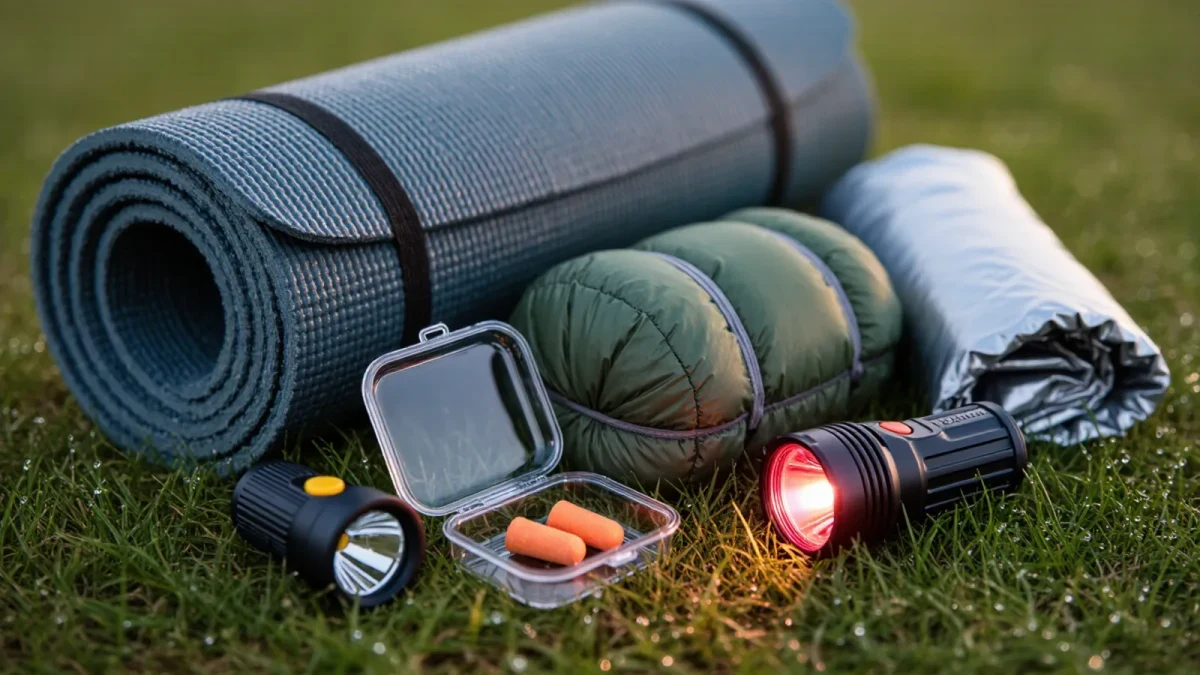
- Sleeping mat, rated for ground cold. The ground steals more heat than the air; this is the single most underestimated item.
- Sleeping bag plus a cheap fleece blanket. European summer nights at festival sites routinely drop to 10°C or lower.
- Foam earplugs and an eye mask. Separate from your music earplugs. Campsites do not sleep; they pause.
- Headlamp with a red-light mode. Phone torches kill batteries you need for the meet-up text.
- Toiletry kit, towel, roll of toilet paper, bin bags. Bin bags are waterproofing, groundsheet, laundry bag and rubbish solution in one.
- Water carrier or refillable bottles. Stand pipes can be a field away.
- Camping stove only if the festival permits. Many ban open flames outright; check the rules before you pack fuel.
How do you actually sleep at a festival?
Strategy, not luck. Sleep in shifts if you're in a group — someone always wants the 2 a.m. close-out, someone always wants the 11 a.m. yoga. Go to bed at the dead hour, not the peak: most campsites quieten between 5 and 9 a.m., which is when your real sleep window sits. Keep the tent cool before you get in — a tent in direct sun becomes an oven by 9 a.m., so a reflective silver tarp or even a silver emergency blanket draped over the roof buys you an extra hour of usable sleep. And eat properly before sleeping; a 3 a.m. instant-noodle refusal is a 9 a.m. headache.
Accept the arithmetic: five to six usable hours a night is a good festival outcome. Plan your days around it rather than pretending tonight will be different.
How do you keep your stuff safe while camping?
Layers of inconvenience. Use the festival's lockers for anything genuinely valuable — passport, spare cards, car keys — because tent locks only advertise which tent has something worth stealing. Split cash and cards between people and places. Don't leave power banks, sunglasses or anything with a logo visible through the mesh. Zip the tent fully closed every time, including the five-minute toilet run; most opportunistic theft is a walked-past open door. And get your camp neighbours' faces in the first hour — a campsite where people recognise each other is the cheapest security system that exists.
What about campsite food and water?
Water first: locate the stand pipes on the map the day you arrive, and fill everything you own before the site fills. Food-wise, the winning combo is boring and effective — things that survive a hot car and a hotter tent: bread, peanut butter, nuts, fruit, instant meals if stoves are allowed. Eat one proper hot meal from the vendors daily; festival food stalls are part of the experience and part of your energy budget. Skip anything that needs refrigeration, because your tent is a slow oven and food poisoning is the one headliner nobody requested.
How do you leave without the exit becoming hell?
The last morning has two traps: the pack-down in the rain and the traffic. Pack the night before if you can sleep in a mostly-packed tent, leaving out only the sleep kit. Take everything — tent included — or use the festival's recycling drop-off points where offered; abandoned tents are landfill, not someone's free gear. Leave before the headliner's final song or accept a two-hour queue, and agree your driver's zero-drinking rule in advance. Monday-morning patience is part of the ticket price.
Practical details: camping checklist
Format: applies to camping zones at European electronic festivals.
Sleep system: two-skin tent, ground-cold-rated mat, sleeping bag, blanket, foam earplugs, eye mask.
Camp kit: headlamp, water carrier, toiletries, toilet paper, bin bags, tent marker, cooler bag where permitted.
Security: locker for valuables, split cash, tent fully zipped, know your neighbours.
Rules: check your festival's fire, stove and glass policy before packing; policies vary by event and are subject to change as of March 2026.