Trance is a melodic branch of electronic dance music defined by long tension-building structures, sustained synth pads, emotive chord progressions and a tempo typically between 132 and 142 BPM. It emerged in Germany and Belgium around 1990–1992 and, after a commercial peak in the early 2000s, survives in 2025 as one of the most stylistically self-aware genres in club music — with a sound its fans can identify in two bars.
Where did trance come from?
Europe, at the moment techno met new-age melodics. The commonly cited ignition points are Age of Love's "The Age of Love" (1990), an Italo-tinged Belgian production whose chord stab became one of dance music's most remixed motifs, and the German scene around Frankfurt and Berlin, where labels like Eye Q — co-founded by Sven Väth — released what the press soon labeled trance. The name, used loosely at first, stuck to music that aimed at hypnosis: repetitive, layered, harmonically lush.
The Dutch commercial machine took over in the late 1990s. Tiësto's "Traffic" hit number one in the Dutch singles chart in 2003, the first instrumental to do so in decades, and his set at the 2004 Olympic Games opening ceremony in Athens — a first for a DJ at that scale — marked the genre's arrival as stadium entertainment. Armin van Buuren's weekly radio show A State of Trance, running since 2001 and past 1,200 episodes as of 2025, built the genre's global nervous system.
What defines the trance sound?
Structure above all. A classic trance track is a narrative in three acts: a groove-and-atmosphere intro, a long breakdown that strips the drums away and lifts the melody, and a release — the drop — where the rhythm returns carrying the full emotional payload. Where house lives in the loop, trance lives in the arc. A single track often runs eight to ten minutes, and DJ sets in the genre are measured in journeys rather than bangers.
- Tempo: 132–142 BPM is the standard band; uplifting trance conventionally sits at 138.
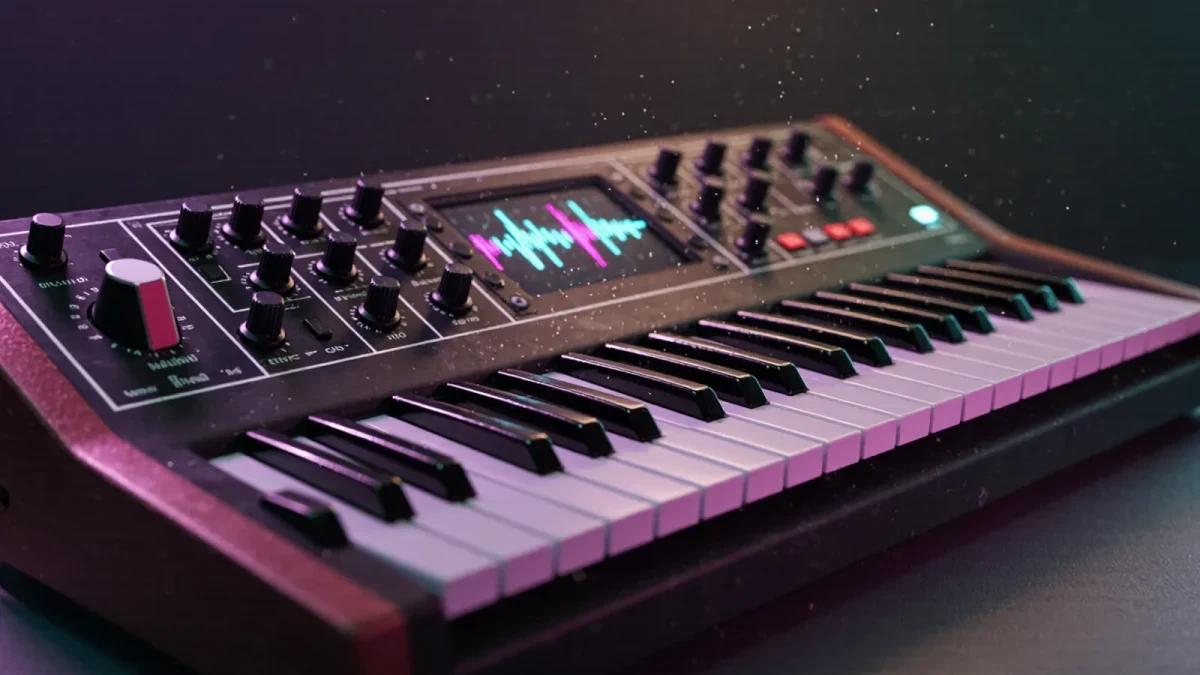
- Melody: long, sustained lead lines — often wide supersaw synths — carrying sentimental chord progressions.
- Builds and breakdowns: extended risers, white-noise sweeps and drum cuts engineered for arms-aloft release.
- Vocals: from wordless pads to full diva performances; vocal trance became its own chart category.
One line of dry scene honesty: trance is the genre dance snobs loved to mock and could not stop humming. Its emotional register is unapologetically big — that is the feature, not the bug.
What are the main trance subgenres?
The family has narrowed and specialized over three decades. The branches you will actually encounter in 2025:
| Subgenre | Tempo | Signature |
|---|---|---|
| Progressive trance | 128–136 | Slower, atmospheric, groove-led — the early-'90s register |
| Uplifting trance | 136–142 | 138-BPM anthems, huge breakdowns, major-key catharsis |
| Psytrance | 145–150 | Dense rolling basslines, hypnotic, Goa-descended |
| Tech trance | 138–142 | Techno-inherited percussion under trance leads |
| Balearic / vocal trance | 130–138 | Song-form, radio-facing, Ibiza-primed |
Psytrance deserves its own gloss: descending from the Goa beach scene of the late 1980s, it runs faster, leaner and more hypnotic than the Dutch mainstream, and as of the mid-2020s it is arguably trance's fastest-growing wing, with dedicated stages at major European festivals.
Who are the genre's defining names?
The canon is settled enough to list. Tiësto and Armin van Buuren — the latter's This Is Me arena runs documented his five-times-running number-one standing in DJ Mag's Top 100 poll between 2007 and 2011 — plus Paul van Dyk, Above & Beyond, Ferry Corsten and Paul Oakenfold, whose 1990s residency at Liverpool's Cream made him trance's first British superstar. On the harder and psychedelic sides: Vini Vici carrying psytrance to main stages, and earlier, the Belgian and German producers whose 1990s records still anchor classic sets.
Rankings caveat: DJ Mag's poll is a fan vote, not an audit; treat it as a thermometer of fandom. But those five consecutive van Buuren wins remain the genre's most-cited status marker, and the poll itself — founded 1993 — has been won by trance DJs more often than by any other genre's representatives.
Did trance really die?
It was declared dead around 2010, when EDM's house-dominated first wave pushed it off US radio, and the reports were exaggerated in the usual way. What actually happened was migration. The Dutch leadership diversified — Tiësto pivoted to house and EDM in the early 2010s to global commercial effect — while the faithful doubled down: A State of Trance and its rival shows kept weekly reach in the tens of millions of listeners across dozens of countries, and festival brands like Dreamfields, Transmission and the trance-focused stages of Tomorrowland and Electric Daisy Carnival continued selling enormous capacities into the 2020s.
The revival came dressed as nostalgia and as speed. By 2023–2025, trance stabs and 138-BPM builds were surfacing in hard trance's festival takeover — a style pushing 150-plus BPM that younger audiences rediscovered as both retro and new. The big-room techno and hard techno scenes of 2024–2025 borrowed trance's melodic lifts openly, to the point where festival programs now bill "trance-techno" crossovers without irony.
How do you dance to trance — and where?
differently from house, and it helps to know the rhythm of the room before your first event. Trance crowds do not conversationally shuffle; they face the stage, they raise arms at the build, and they sing the instrumental leads back at the DJ. The breakdown is a communal held breath — expect the room to go quiet enough to hear the pads, then detonate. Hoops and flags appear at the bigger events; the culture is unashamedly sincere, closer to a metal crowd’s devotion than a techno room’s cool.
Where to catch it as of the mid-2020s: the Netherlands remains the headquarters, with Amsterdam, Utrecht and Rotterdam events selling arenas months ahead. Germany, Poland and Czechia carry huge transmission-style productions, the UK sustains a devoted club base, and dedicated trance stages at Tomorrowland and Electric Daisy Carnival keep the sound visible at the biggest festivals. Check promoter announcements for current editions — lineups and dates change every season.
How should a newcomer listen?
Three records, one per era. Robert Miles's Dreamland (1996) for the piano-led Balearic branch — its single "Children" was a Europe-wide chart phenomenon. Above & Beyond's Tri-State (2006) for songwriting-grade uplifting trance. Any A State of Trance yearmix from the 2020s for the modern mainstream. Then, if the bug bites, follow the psytrance corridor: Infected Mushroom's Classical Mushroom (2000) is the genre's gateway classic.
Practical listening note: trance rewards full tracks, not playlist skips. The build is the argument. Cutting to the drop is reading only the last page.