Ambient music asks something unusual of the listener. It is made to be heard, but not to demand attention. Tone and atmosphere lead the way, while beat and melody step back.
The result is a genre built for calm, focus, and drift. Here is what defines it, where it came from, and how to listen your way in.
The Definition
It is often peaceful sounding. It may lack a steady beat, structured melody, or even a fixed composition. The sound comes in textural layers that reward both passive and active listening, and the mood it aims for is calm and contemplative. That does not mean the music is simple. Making one layer sit calmly next to another takes real care. This connects to our earlier piece, Vinyl vs Streaming Sound Quality — Vinyl vs Streaming: How We Listen to Electronic Music Now.
The genre has an atmospheric, visual, and unobtrusive quality. Nature soundscapes may be included. Some works use sustained or repeated notes, as in drone music. Synthesizers can also imitate instruments such as the piano, strings, and flute.
The Roots Before the Name
The idea predates the label by decades. Erik Satie, an early 20th-century French composer, created an early form of background music that he labeled furniture music, describing it as the sort of music that could be played during a dinner to create a background atmosphere for that activity, rather than serving as the focus of attention.
Other styles fed the approach too. Musique concrète, minimal music, Jamaican dub music, and German electronic music all presaged the genre before it had a name. Each of those styles prized texture and space over hooks, and ambient music kept that priority. For related coverage, see How Streaming Royalties Actually Work for Electronic Music Producers.
Brian Eno Names the Genre
The genre was prominently named and popularized by the British musician Brian Eno in 1978 with his album Ambient 1: Music for Airports. Eno opined that ambient music must be as ignorable as it is interesting, a phrase that still works as the genre’s mission statement.
He was not the first, though. Early pioneers of the genre included Tangerine Dream, Klaus Schulze, Wendy Carlos, and Kraftwerk. Their synthesizer work pointed the way before the name existed.
The style kept moving. It saw a revival towards the late 1980s with the rise of house and techno music, and it grew a cult following by the 1990s.
How to Listen
The best way in is low pressure. Play it while reading, working, or falling asleep, and notice what changes when you lean in. Start with the named classics, then follow your own threads: drone works for long sustained tones, nature-heavy pieces for texture, dub-influenced records for warmth.
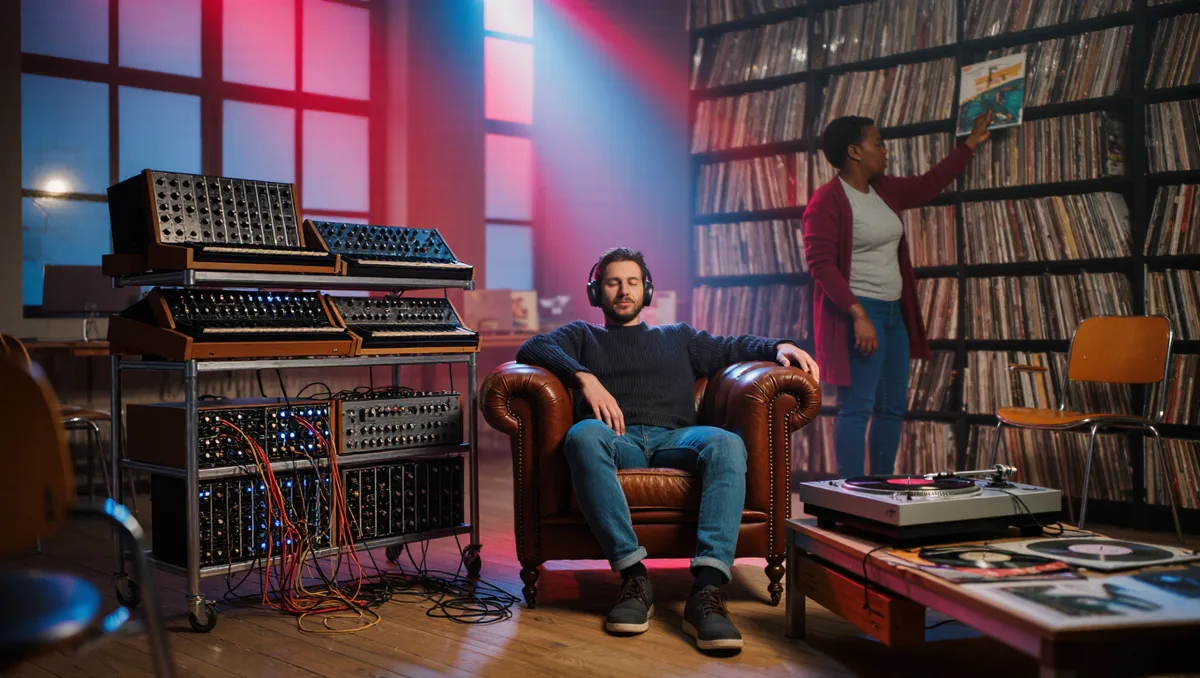
Active and passive listening both count. The genre was designed for exactly this flexibility, and there is no wrong way to spend time inside it. Volume can stay low. The music is built for it. Headphones help at first, since small details carry a lot of the meaning.
Why the Genre Keeps Growing
Ambient music has not achieved large commercial success. It has still earned steady acclaim over the years, especially in the Internet age. Its relatively open style pulls in influences from classical, avant-garde, and experimental music, as well as folk, jazz, and world music.
That openness is why new listeners keep finding their own way in, and why bedroom producers adopted the genre so readily.
Conclusion
Ambient music is less a recipe than an attitude: tone over tension, atmosphere over anthem. It began with Satie’s dinner-table idea, got its name from Eno in 1978, and still rewards anyone willing to let sound simply sit in the room. Queue up an album, lower the volume, and let it be as ignorable as it is interesting. Somewhere in that long history there is a record made for exactly the hour you are in.