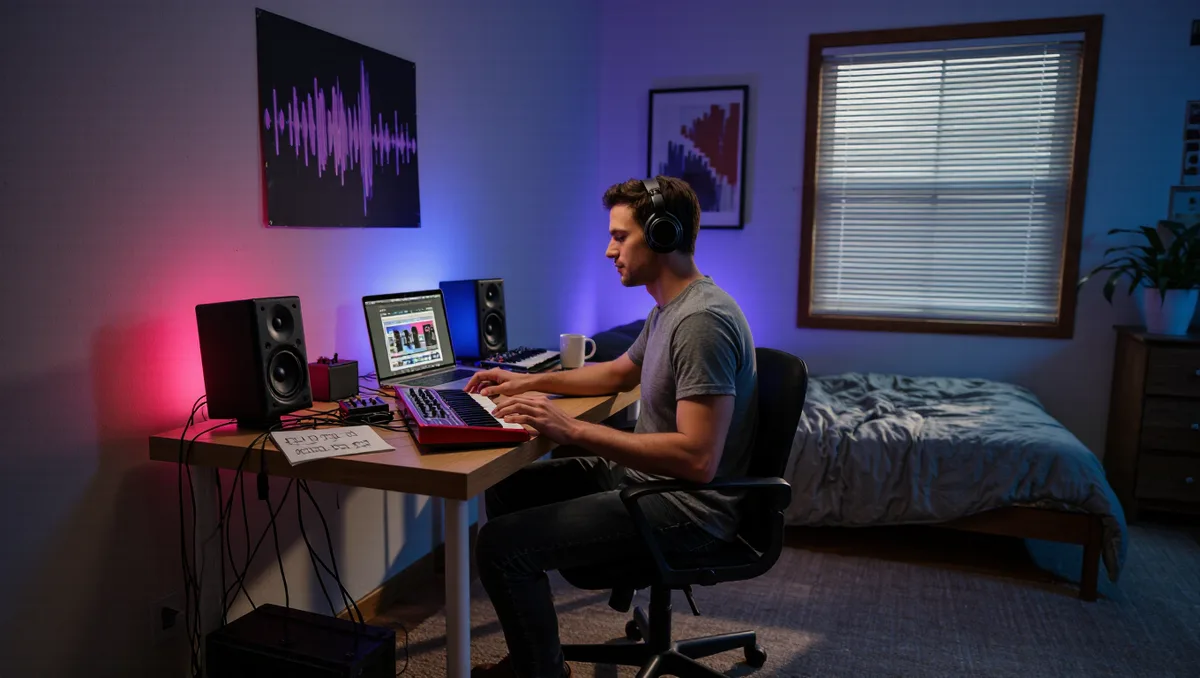
Making electronic music no longer demands a studio. The laptop on your desk holds more production power than the rooms that built entire genres. If you want to produce, the honest barrier is not gear. It is knowing where to start and what to ignore.
Electronic music is a family of genres that use electronic instruments, circuitry-based technology, software, and general-purpose tools such as personal computers, per Wikipedia (Wikipedia). Home production has deep roots, too: as music technology became affordable in the nineties, electronic music production became an established part of popular culture, per Wikipedia. Here is a practical path from zero to your first finished track.
Step One: Pick a DAW and Stay With It
A digital audio workstation, or DAW, is the software where you record, arrange, and mix. Most offer trials, so test two or three, then commit to one for at least a year. Tool-hopping feels productive but resets your progress every month. Fluency in one program beats average skill in five.
Spend your first days learning where the piano roll, the mixer, and the sound browser live. Make one small loop on day one, even a bad one. You are building habits, not hits yet.
Step Two: Learn Drums and One Synth
Start with drums, because the groove defines the genre. Much pop electronic music is most recognizable in its 4/4 form, per Wikipedia, so begin with a simple kick pattern, then layer hats and claps around it. Keep the pattern plain until it grooves on its own. Copying the drum pattern of a track you love, by ear, is a fast teacher too. For related coverage, see Electronic Music BPM Cheat Sheet: Every Genre.
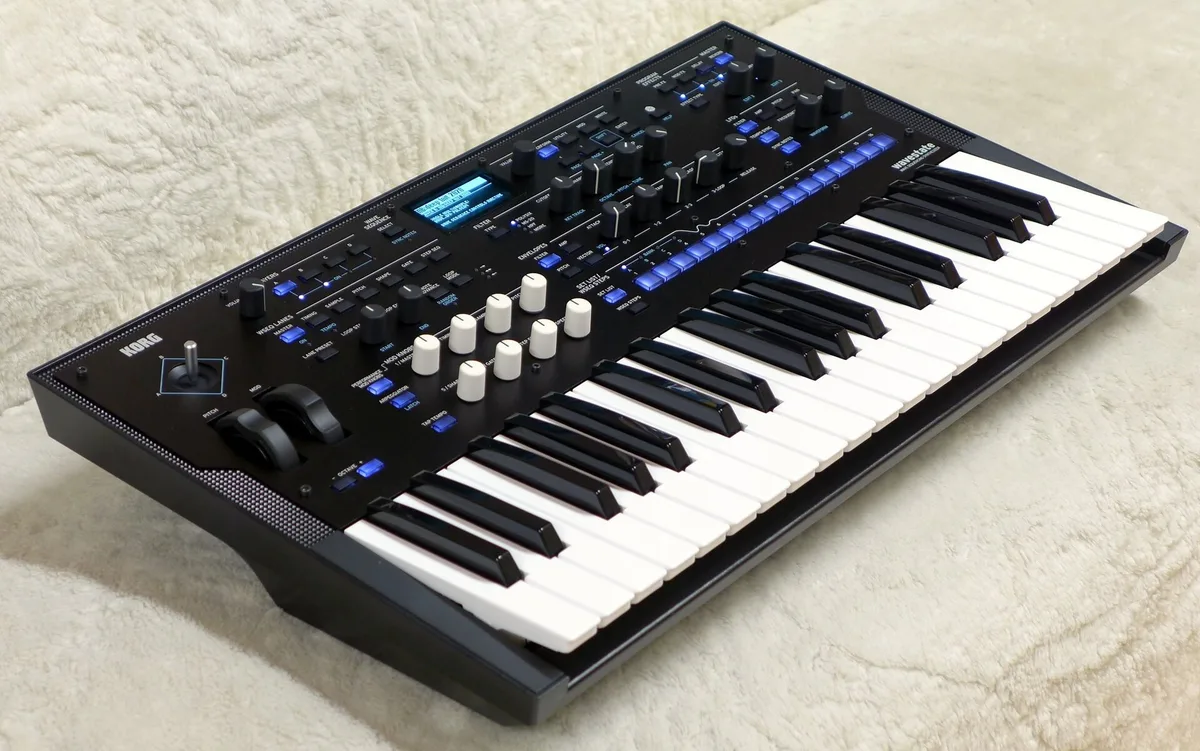
Next, learn one software synth properly instead of collecting presets. The pioneers worked with few controls: Moog synthesizers and drum machines helped popularize synthesized electronic music in the early 1970s, per Wikipedia. Learn one oscillator, one filter, and one envelope, and most presets will stop feeling like magic.
Step Three: Finish Small Tracks
Beginners tend to start ambitious and stall. Flip that habit. Build an eight-bar loop, then shape it into a two-minute sketch with an intro, a peak, and an ending. Every finished piece teaches arrangement, balance, and taste at once. Ten finished sketches will teach you more than one abandoned epic.
Save every version as you go, and name files so you can find them later. Old sketches often hold the seed of a new track. A tidy folder beats a perfect memory.
Step Four: Mix a Little, Often
Mixing is just the act of balancing levels so every part can be heard. Do it in small passes as you build, not as one giant weekend. Pull down anything that fights the kick, cut low rumble from parts that carry no bass, and rest your ears between passes. Compare against a track you love in the same style, and note one fix at a time. Headphones are fine to start, but check your mix on speakers or cheap earbuds too, because every system hides different problems.
Step Five: Share and Repeat
Home production can get lonely, so build feedback into the loop. Upload sketches, ask specific questions about your drums or arrangement, and study what listeners actually respond to. Then start the next track while the lessons are fresh. Keep a simple folder of finished files by date, because looking back at old tracks shows progress better than any chart. Momentum, not perfection, is the whole game at this stage.
Conclusion: Start Small and Finish Often
Electronic music has always moved forward as tools got cheaper, from early synthesizers and drum machines to digital instruments, MIDI, and the laptop studio. Pick one DAW, learn the drums and one synth, finish short tracks, mix in small passes, and share your work. The first finished track matters more than the gear you almost bought. This connects to our earlier piece, How Streaming Royalties Actually Work for Electronic Music Producers.