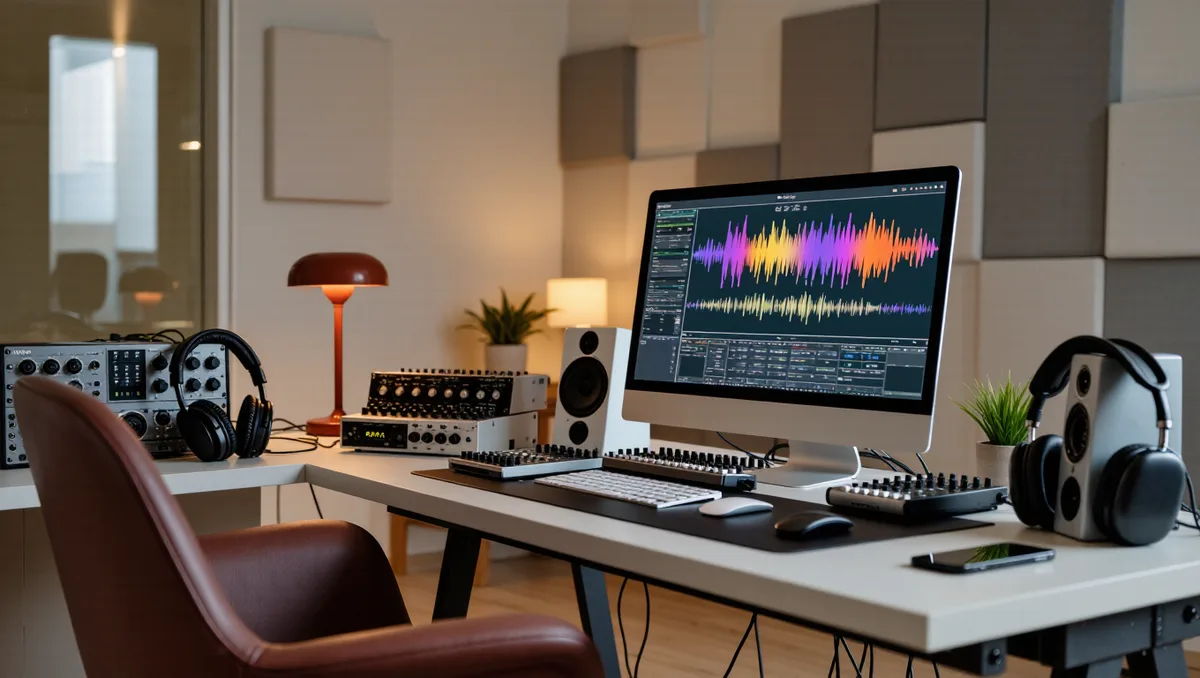
A warm-up set is the opening slot whose job is to prepare a room for the headliner: fill it gradually, set a tonal and energetic baseline, and hand over a floor that is primed but not spent. Done well it is invisible — the night simply feels like it started well. Done badly, an empty-at-peak room or a burnt-out floor tells the story for everyone. It is the hardest booking to do brilliantly precisely because its success is measured in restraint rather than peaks.
The slot is also the traditional apprenticeship of the scene — most DJs who headline today learned the craft in exactly this fire.
What is the warm-up DJ actually there to do?
Three jobs, in order. First, atmosphere: the first hour of a club night is a social phase — people arrive, find their friends, buy the first drink, scan the room. Music that respects that phase, mid-energy and mixable, lets the night assemble itself. Second, accumulation: the warm-up's real KPI is floor density at handover time. A room that is comfortably full and gently moving at the headline hour is a professional success even if nobody learned your name. Third, positioning: the tonal and tempo runway you leave — the headliner's first track should land as arrival, not correction.
The failure modes are equally concrete. Play your biggest records at ten thirty to a half-empty room and you have spent the night's money early; the headliner arrives to find the crowd's ceiling already touched. Play too flat and the room never congeals — people drift between rooms, the bar feels louder than the floor, and the night starts twice.
What the job is not: an audition for the headline slot, a chance to prove your crate depth with ninety minutes of impenetrable deepness, or a set that competes with the name on the poster.
How do you choose warm-up tracks?
Start from the headliner and work backwards. Find out who plays after you — most promoters will tell you, and set-list archives online make their ranges public knowledge — and open a tempo window maybe four to seven BPM below their typical starting range. A techno headliner who opens at 128 does not want to inherit a floor calibrated to 140; a house legend who eases in at 120 does not want your 126 bangers. Your last track should hand over like a relay baton, not a gauntlet.
Then select for groove over event. The warm-up pocket is full of records that would bore at peak — dub versions, tool tracks, head-nod grooves, long blends where two records share a pulse for minutes. Energy labels help: if your folder is rated one to ten, a warm-up lives mostly at three to five, touching six only when the room is demonstrably ahead of schedule.
Keep recognisable weapons in the bag but unplayed. The discipline of holding back a floor-filler you know would work at 23:00 is the exact muscle this slot exists to train — and on the nights the headliner's flight is delayed, that reserve becomes your promotion.
How do you read a room that is still arriving?
Early rooms give sparser signals. The floor is small, so faces matter more than crowds; watch the bar line and the entrance, because those two queues are your arrival rate. A good early sign is people settling — drinks down, bodies oriented to the booth, the first couples moving. The correct response to acceleration is lag: nudge energy up one notch, watch for eight bars, then nudge again. The correct response to silence is patience — dropping energy further, not louder, and letting the room's own conversation carry the social phase.
Time-of-night awareness is the other read. Promoters can shift schedules, so confirm your slot length on arrival, and treat the last twenty minutes before handover as a dedicated landing sequence: hold or slightly lift, clean mixable grooves, a tonal centre that flatters whatever usually comes next from the following artist.
And log it. A note on your phone — room, capacity, what worked at what hour — turns every warm-up into a dataset. Six months of logs is a private encyclopedia of how rooms fill, which is knowledge no sync button distributes.
What etiquette comes with the slot?
The unwritten contract is short. Communicate with the promoter about who follows and when the changeover lands. Finish on time — every minute you run over is stolen from the name on the poster. Leave the booth tidy and the mixer gain-staged where the next DJ expects it. If the headliner is present early, a brief hello is professional; a request for their playlist is not.
On the promotional side, warm-up slots are where reputations quietly compound. The promoter who watches you respect the slot, fill the room and hand over cleanly books you again — the headliner who noticed the floor was ready sometimes asks for you by name. Scene history is thick with residents whose warm-up reliability became residency, and residents whose residency became headline careers. The slot pays its dividends slowly and then all at once.
What gear preparation does a warm-up slot need?
The slot is also where boring logistics become reflexes. USB sticks prepared in the venue's format, verified and duplicated, because the warm-up is often the first DJ on an unfamiliar booth. Headphones that seal, a charged phone with the promoter's number, and arrival early enough to hear the room before you program it. None of it is glamorous; all of it is the difference between being booked once and being booked back.
How do you get warm-up bookings?
The same way as any booking, with one advantage: the slot is abundant and cheap to give. Local promoters always need openers, so the practical path is venue-first — identify the night whose music you actually open well for, attend as a customer, and offer a short, honest demo built for their room: forty minutes of warm-up, not a peak-time missive that misreads the assignment. A demo that understands restraint is rarer than a demo full of bangers, and every promoter knows it on first listen.
Then deliver the invisible set, and deliver it again. The art of the warm-up is the art of being asked back — one restrained hour at a time.