A DJ rider is the list of demands an artist sends to a promoter before a gig. It comes in two parts: the technical rider, which specifies the gear in the booth, and the hospitality rider, which covers everything from food to hotel rooms. Get either part wrong and the set can suffer, or the booking can fall apart entirely.
The document exists because a DJ set is only as good as what it runs on. A booth with the wrong mixer, no monitors or a CDJ that skips mid-track is not a small problem; it is the whole show. Promoters negotiate over riders because meeting them costs money, and because some demands are flexible while others are not. Knowing which is which is the real skill on both sides of the email. Readers following this should also see AI Tools in Music Production: The Scene's Real Argument.
The rider is also where the working life of a DJ becomes visible. Most fans never see the paperwork. They see two hours of music. The paperwork is what made those two hours possible.
What goes in a technical rider?
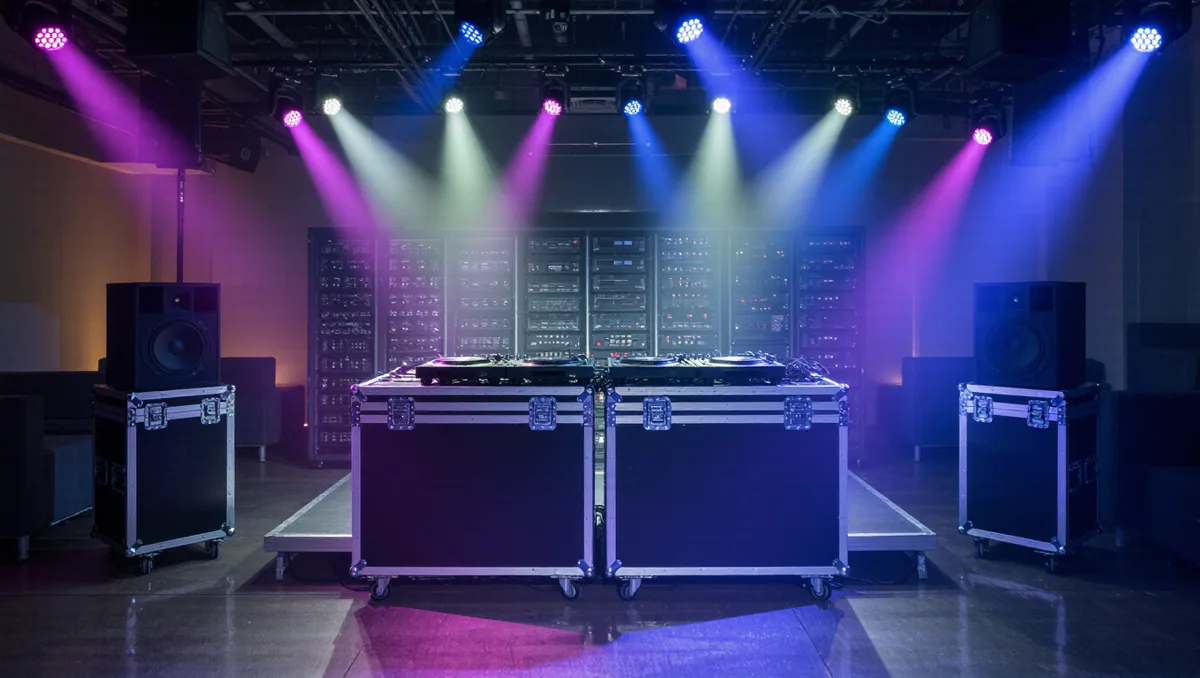
The technical rider lists the equipment the DJ needs in the booth to perform. At its core, per Wikipedia's overview of the disc jockey, a standard club booth consists of playback sources such as CDJs or turntables, a DJ mixer with crossfader and cue functions, and headphones for pre-listening to the next track. A rider takes that baseline and gets specific about it.
A typical technical rider will name the exact mixer model, the number and type of playback units, and whether the artist works on vinyl, USB sticks or a laptop with a controller. It will usually specify booth monitors, the speakers pointed at the DJ so they can hear what the crowd hears. It may also list an effects unit, a microphone, and the required table height and booth lighting. Some artists ask for a specific lighting state in the booth: dark enough to see the LEDs, never bright enough to flatten the room's mood. We covered a connected angle in Vinyl Pressing Capacity: Why Your Record Waits Months.
The rider also covers the sound system itself in broad terms, and the signal path from booth to main speakers. A DJ playing a festival stage cares about time alignment and monitor coverage across a wide booth. A DJ playing a 300-capacity basement cares that the monitors actually work. The scale changes; the principle does not.
Why so exact? Because mixing is a physical craft. As Wikipedia's entry explains, DJs blend tracks by aligning beats so the rhythms and tempos do not clash, then hand the energy from one record to the next. That work depends on hearing the low end clearly and on gear that responds the way the artist expects. Swap the mixer for an unfamiliar model with a different filter layout and the transitions get worse. That is the whole argument behind a detailed technical rider.
What goes in a hospitality rider?
The hospitality rider covers the human side of the booking: travel, accommodation, food and drink. The standard items are flights or ground transport, a hotel room, a meal before or after the set, and a modest drinks provision for the booth. None of it is exotic. Most of it exists because DJs travel constantly and arrive tired.
The infamous horror stories, the bowls of only blue M&Ms and the like, come mostly from the rock world of the 1970s and 1980s, and they have hung around as shorthand ever since. In dance music the reality is usually duller and more practical. A hot meal after a five-hour set. Bottled water in the booth, because shouting over a loud system dries you out fast. A quiet room at the hotel if the flight landed that morning.
Hospitality clauses can carry a second purpose. Some artists use an unusual request as a quiet test: if the promoter read the rider closely on the small things, they probably read the technical section closely too. It is a diligence check dressed as dinner.
Why do promoters negotiate over riders?
Because every line in a rider is a cost, and not every cost is necessary. A promoter running a small club night has a finite budget. Hiring a specific mixer the artist insists on, flying in extra backline, or paying for a hotel upgrade all eat into a margin that is already thin. Negotiation is how both sides find the version of the show that works.
Some items are genuinely non-negotiable. If an artist performs a hybrid live set on their own hardware, no substitute gear will do. If a turntablist needs specific turntables to perform the techniques they are booked for, that is the show. Other items are soft. The brand of water, the exact restaurant, the timing of soundcheck. A good promoter reads the difference and pushes back only where it is safe to.
The negotiation also runs the other way. Promoters know their rooms. A booth built for two decks cannot take five without a rebuild, and a low ceiling changes how monitors should be placed. The best rider conversations are technical exchanges, not demands. Both sides want the same thing: a set that sounds right.
What this means for smaller promoters and new DJs
For a promoter booking early-career artists, the rider is usually short. Many newer DJs work from a laptop with a controller, and software has lowered the hardware bar: VirtualDJ, which has been around for more than 30 years and is free for home use, markets itself as working with the most popular controllers and mixers with plug-and-play detection, per the company's own download page. That flexibility means a small venue can often host a solid set with gear it already owns. A company's claims about its own product are the company's claims, not independent verification, but the practical point stands: ask what the artist actually needs rather than guessing.
For new DJs writing their first rider, the advice is to be precise and modest. Name the gear you genuinely perform on. Ask for working monitors and a soundcheck. Skip the champagne. A rider that reads like a professional's checklist earns goodwill; a rider that reads like a wish list earns eye-rolls and a shorter booking next time.
It also pays to understand the economics on the other side of the email. The booking fee, the door split and the rider all come out of the same night. Our analysis: the artists who last are the ones whose riders make the promoter's job easier, not harder, because promoters rebook people who are easy to work with.
How does a rider actually get used on the night?
The process runs in stages. First the booking is agreed and the fee settled. Then the rider is sent, usually weeks ahead, and the promoter confirms or flags what they cannot provide. Advance emails go back and forth until both sides sign off. On the day, the artist or their tech checks the booth against the rider during soundcheck, and any gaps get fixed or worked around before doors.
Soundcheck is where the rider earns its keep. It is the one moment the DJ can test the monitors, run a track through the system and hear the room properly. Skipping it to save money is a classic false economy. A set played on monitors you cannot hear is a set played half-blind.
When things go wrong anyway, and sometimes they do, the rider is the record of what was promised. That matters less as an argument on the night than as context for the next booking. Promoters keep notes. So do artists.
The takeaway
A DJ rider is not diva behaviour. It is the specification for a live performance, split into the gear that makes the set possible and the care that makes the artist able to deliver it. Technical riders exist because booth equipment shapes the sound directly. Hospitality riders exist because touring is tiring and small comforts are cheap insurance. Promoters negotiate because budgets are real, and the good ones negotiate like engineers rather than accountants.
Next time a set sounds flawless in a small room, there is a decent chance a two-page document made it that way. The rider is the invisible half of the night, and now you know what is in it.