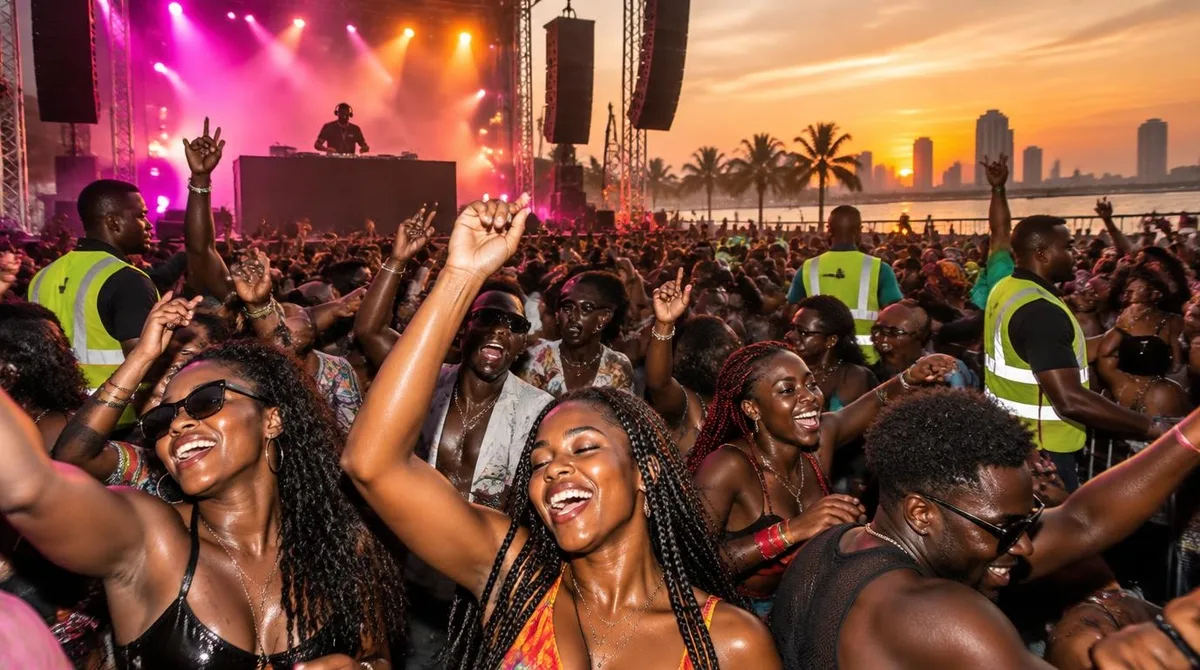
Lagos is making a bid to become an electronic music destination, not just an exporter of records. A new festival called This Is Me lands on December 19, headlined by Grammy-winning South African DJ Black Coffee, per Hypebot. The 12-hour event is expected to draw roughly 5,000 people, and its organizers think the city is ready to compete with established international hubs.
Why it matters: the global industry usually measures cities like Lagos by what they ship out. Afrobeats artists headline major venues abroad. The live economy at home is a different story, and this festival is a bet that it has matured. The festivals economy worldwide runs on the same question: can a city host at scale, or does every big show import its production?
What is This Is Me festival?
This Is Me is a one-day, 12-hour electronic music festival in Lagos on December 19. It is organized by M:E Entertainment and DAPO, with multiple stages and immersive installations, and a lineup mixing international and local talent, according to Hypebot. Black Coffee, the South African DJ born Nkosinathi Innocent Maphumulo, tops the bill.
The organizers describe it as their most ambitious production yet. That word choice carries weight. M:E Entertainment already hosted Keinemusik's Rampa in 2025, which the outlet cites as evidence of demand for international electronic acts in the city. This Is Me is the step up from that.
A headline booking like Black Coffee also means a serious rider and serious production demands. That is where the local infrastructure argument comes in. This connects to our earlier piece, AI Tools in Music Production: The Scene's Real Argument.
Why does local production capacity decide this?
International-scale festivals need more than talent and a crowd. They need sound systems, lighting, staging, trained technicians, logistics networks, and experienced production companies. According to IQ Magazine, as cited by Hypebot, Nigeria's live production industry has improved to the point where more world-class equipment and expertise are available locally, reducing the need to import them.
That detail is the real story. When production must be flown in, costs rise and the local economy captures less of the spend. When it is domestic, promoters keep more money in the city and technical crews, suppliers, and independent event businesses get work. The festival is a test of whether that equation now holds in Lagos.
Is Lagos's electronic scene actually big enough?
The numbers say yes, at least at the grassroots level. A 2026 Black Noise Research report identified 199 electronic music events across seven Nigerian cities in the first six months of the year, per Hypebot. In Lagos itself, parties like Element House and Group Therapy have built spaces for electronic music outside the traditional nightclub model. Readers following this should also see Billboard's New Events Calendar Shows How Crowded the Music Business Year Has Got.
The city's sound palette runs from Afrohouse and Amapiano to underground dance parties and experimental DJ collectives. That is a diverse ecosystem of promoters, performers, and audiences, not a single genre riding a trend. Lineage matters here: Lagos has already reshaped global popular music once. The promoters want the live side to follow.
What stands in the way?
Hypebot flags three open questions for Lagos's electronic music economy: affordability, transportation, and the sustainability of grassroots venues. A Nighttime Culture Index assessment, cited in the same report, highlights both the city's growing creative ecosystem and the obstacles facing audiences and nightlife operators.
Those are familiar pressures for any scene that grows fast. A 5,000-person festival can coexist with a grassroots party circuit, or it can drain it. Which way Lagos tips depends on whether the December event builds the local technical base or simply books around it.
What should you watch next?
Watch whether This Is Me becomes a repeat edition rather than a one-off. The evidence so far is a single date, a single headline booking, and a production story still being written. The December 19 festival is another attempt, as Hypebot puts it, to translate cultural momentum into a more substantial live entertainment industry. Whether Lagos captures more of the economic activity around its own sound is the question the event will start to answer.