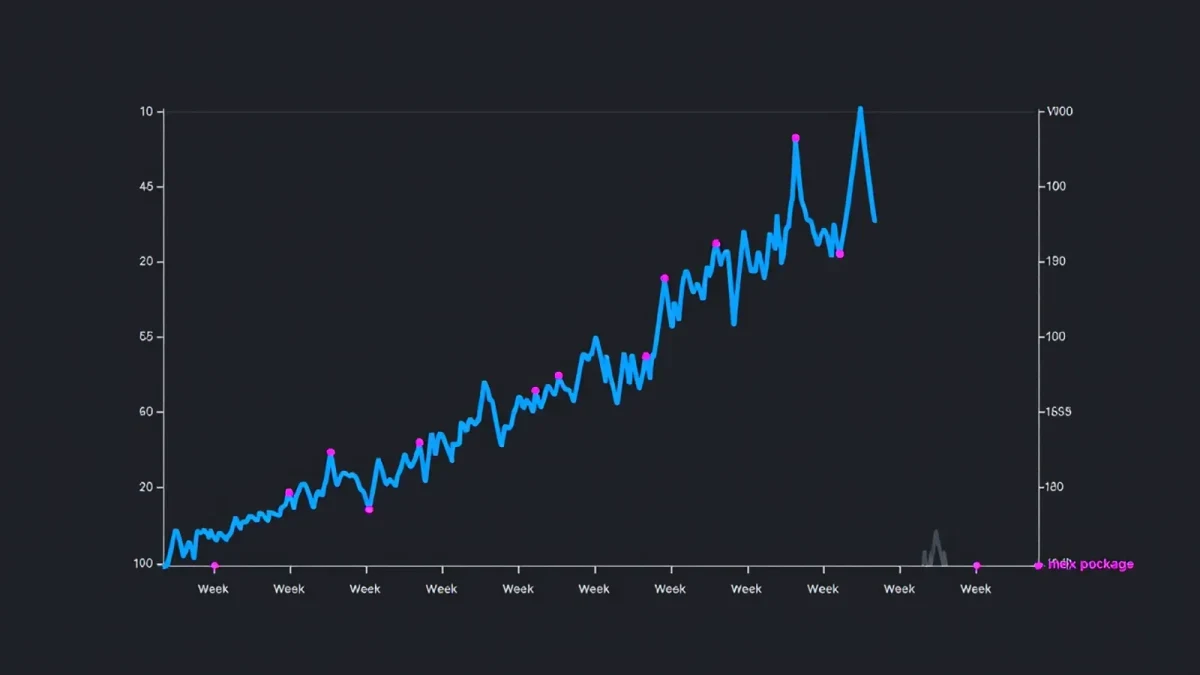
The Beatport charts rank tracks primarily by paid downloads sold on the platform, broken out by genre and release, which makes them the closest thing club music has to a sales chart. Because DJs — not casual listeners — are the buyers, the Beatport Top 100 functions as a live leaderboard of what is actually being played, and a chart position feeds straight back into bookings, fees and label signings.
What is Beatport, exactly?
Founded in 2004 as a download store for DJs, Beatport became the default commercial marketplace for club music: high-quality files, genre taxonomy fine enough to separate Afro house from slapping tech house, and charts measuring what sells. Where streaming pays fractions of a cent, a DJ buying a track on Beatport pays in the vicinity of one to three dollars per download depending on format and tier — a price structure built for professionals, not the general public. The store's own data service, Beatport Analytics, sells labels the numbers behind their releases, and third-party trackers like BeatStats and Songstats index chart history, which is how the industry reads a track's real commercial arc.
How does the Top 100 actually work?
Ranked by sales within a rolling window, per genre. Downloads weigh far more than streams or DJ support in the main charts — money, in other words, is the metric — and releases compete within their genre store, so a melodic techno track fights other melodic techno, not the whole catalogue. Alongside the main charts sit Hype Charts, which surface fast-rising new releases rather than steady sellers, and curated DJ charts, which label bosses and headliners publish themselves. The mechanics reward concentration: a burst of purchases in the first days after release counts more toward momentum than the same sales spread across months, which is why labels coordinate release-day campaigns aimed at exactly that window.
Why does a chart position matter so much?
Because it is legible currency. A Number 1 in a genre chart is a quotable fact — in press releases, booking negotiations, agency pitches. Bookers read the charts as a risk-reduction instrument: a DJ whose tracks chart is a DJ with proven, current demand. Labels read them as A&R signal, signing producers whose records are climbing. The feedback loop is real but bounded: chart success measures the buying behaviour of working DJs, not the wider world, and a stream-driven hit can fill festival main stages without ever denting a Beatport chart. The smart operators treat the chart as one gauge on the dashboard — a precise one, pointed at a narrow road.
How do labels campaign for the chart?
The playbook is standardised across the industry. Release on a Friday into the genre store. Arm the promo list — DJs who received the track free in advance are nudged to buy, not just play, in release week. Price the release strategically, since chart placement responds to units moved, and a well-timed discount or a bundle can concentrate sales. Push a remix package two to six weeks later to restart momentum on the same track page. And publicise the charting itself, because Number 3 in Techno is a story that sells the next release. None of this is secret; it is the ordinary commercial craft of the scene, visible to anyone who watches release patterns.
Does the chart economy distort the music?
Some argue it has, in specific and audible ways. The incentive to sell tracks to DJs favours drops, clean mixes, DJ-tool structures and easily searchable genre conformity; a seven-minute ambient slow-burn is a hard sell against a peak-time weapon with a radio-edit-length clip. The concentration of sales in the first fortnight favours tracks that land immediately. And because the charts are genre-siloed, they reward music that fits its shelf — the taxonomy nudges production toward category. Against that, the same economy keeps small labels solvent without radio or playlist gatekeepers: a thousand DJs buying a track at professional prices is a genuine business, and one that has funded two decades of underground labels. The distortion and the subsidy are the same mechanism.
How should an artist read the charts honestly?
As one instrument with a known error bar. A genre chart measures purchases by a self-selected population of working DJs during a window, boosted by promo mechanics — that is real information about real demand, and it correlates with bookings. It does not measure longevity, festival draw, or anything about listeners who never buy a file. The artists who use charts well read trajectories rather than peaks: a track that climbs for six weeks signals something durable; a one-week spike usually signals a mailing list. Third-party trackers that archive chart history make exactly this kind of reading possible, which is why booking agents keep them open all day.
There is also a versioning reality worth knowing: chart performance attaches to the release, so the remix package that follows a single gives the same track a second chart life on the same momentum. Labels sequence releases accordingly, and an artist negotiating a deal should understand that the label is planning two chart campaigns where the artist counted one. The chart economy rewards whoever holds the calendar.
What are the limits of the chart as a signal?
Genre silos distort in both directions — a genre-defying track is homeless in the taxonomy, while a perfectly category-conformist track gets a shelf and a fight it can win. Chart eligibility and store curation are set by the platform, whose commercial interests shape what gets surfaced; a store-optimal release is not the same object as a scene-defining one. And purchase behaviour ages: the buying DJ population is a cohort, not a generation. The chart tells you what the current cohort of club professionals paid for this month. That sentence is the whole truth of it — and still worth knowing.
The chart is not a verdict on quality and was never meant to be. It is a weekly receipt of what working DJs paid for — and in club culture, that receipt has always carried weight.