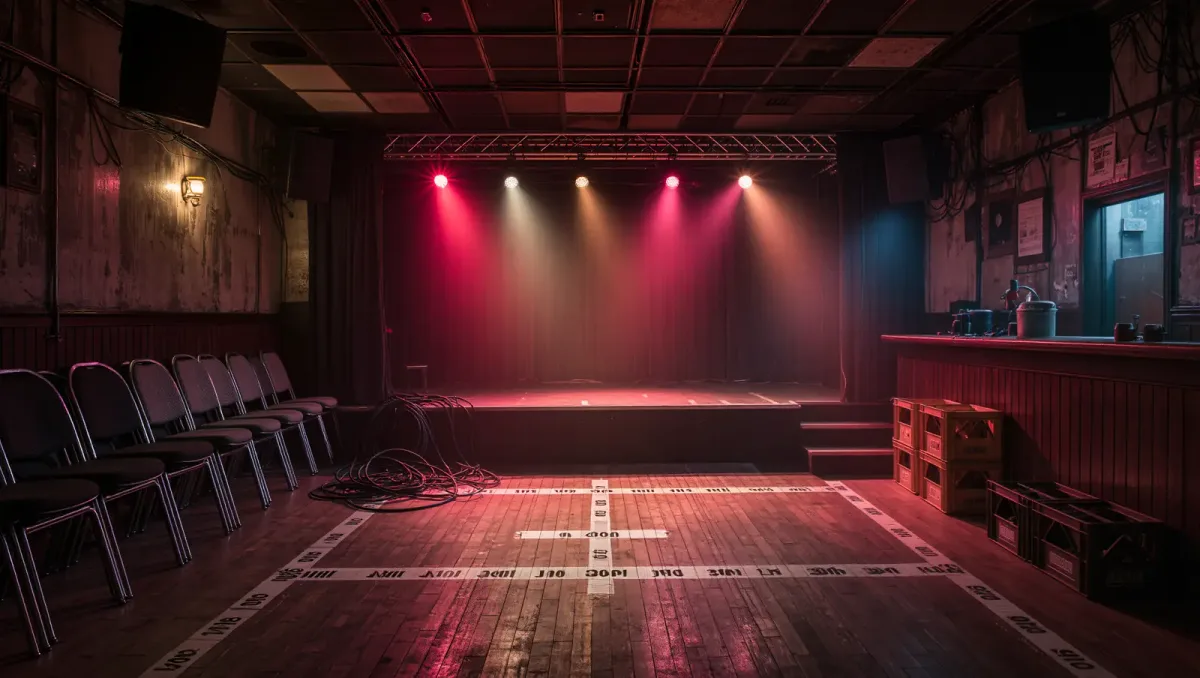
Corsica Studios, the 20-year-old institution under the railway arches by London's Elephant and Castle, will close in March 2026, the venue announced in late 2025 after its site was earmarked for redevelopment, per The Guardian. It is the highest-profile electronic-music closure of the past year — and it landed in a sector still shrinking fast: close to 800 late-night venues shut across the UK between March 2020 and mid-2025, industry body the NTIA has reported, a rate of roughly one every two days.
The story of 2025 was not only closures. It was a split scene: independent rooms dying at one end, mega-venues thriving at the other.
Why is Corsica Studios closing?
Redevelopment, the same force that has taken out a generation of London clubs. The arches that house the two-room venue — a home to underground techno, bass and leftfield club nights, and host to collectives like Touching Bass — are set to be reworked, and the venue said goodbye with a final run of parties into early 2026, per press reports. Corsica's significance was out of proportion to its size: a mid-capacity, artist-run room where a generation of London promoters learned their trade, the kind of venue that does not get replaced by a 5,000-capacity warehouse.
How bad is the wider UK picture?
Per NTIA figures reported through 2025, around 405 nightclubs closed between the start of the pandemic and early 2025 — about three a week — and the total for all late-night venues approached 800 by mid-year. The causes stack: rents and business rates, licensing pressure, staff shortages, and audiences whose drinking habits shifted after 2020. Research cited in UK media has warned that more than half of London's clubs and pubs could shut by 2030 if the trend holds. Nightlife economics have rarely been this hostile to small rooms.
What opened or came back in 2025?
The counterweight. Printworks London — the printing-factory complex in Canada Water that became Europe's most photographed venue before its 2023 closure — returned as a full-time music venue in 2025, restored after a redevelopment deal kept the halls alive. Broadwick Live's Drumsheds kept running at scale in Tottenham, fabric, FOLD, XOYO and a crop of smaller rooms stayed busy, and cities outside London — Manchester, Glasgow, Bristol, Leeds — saw new independent openings and warehouse projects fill gaps the chains left. The money did not leave nightlife; it concentrated.
What does the split mean for the scene?
A hollowing middle. Big venues with corporate backing, ticketing muscle and destination lineups can charge £40-60 and fill; tiny bars with a booth can survive on low overheads. The 300-800 capacity club — the Corsica tier, where scenes are actually built and new DJs get their first serious gigs — is the tier being priced out. For electronic music specifically, the loss compounds: fewer mid-size rooms means fewer promoters taking risks on unfamiliar names, which means slower routes up for local artists, which makes big-venue lineups more conservative. The DJ pipeline narrows from the bottom.
FAQs
Why is Corsica Studios closing?
The venue announced in late 2025 that redevelopment of its Elephant and Castle railway-arch site will end its 20-year run, with final parties running into March 2026, per The Guardian.
How many UK clubs closed recently?
Per NTIA figures, around 405 UK nightclubs closed between early 2020 and early 2025 — roughly three a week — and nearly 800 late-night venues in total by mid-2025.
Is anything growing in UK nightlife?
Yes: Printworks returned as a permanent venue in 2025, Drumsheds and other mega-venues kept scaling, and smaller independent rooms opened in regional cities — growth is concentrating at the extremes.