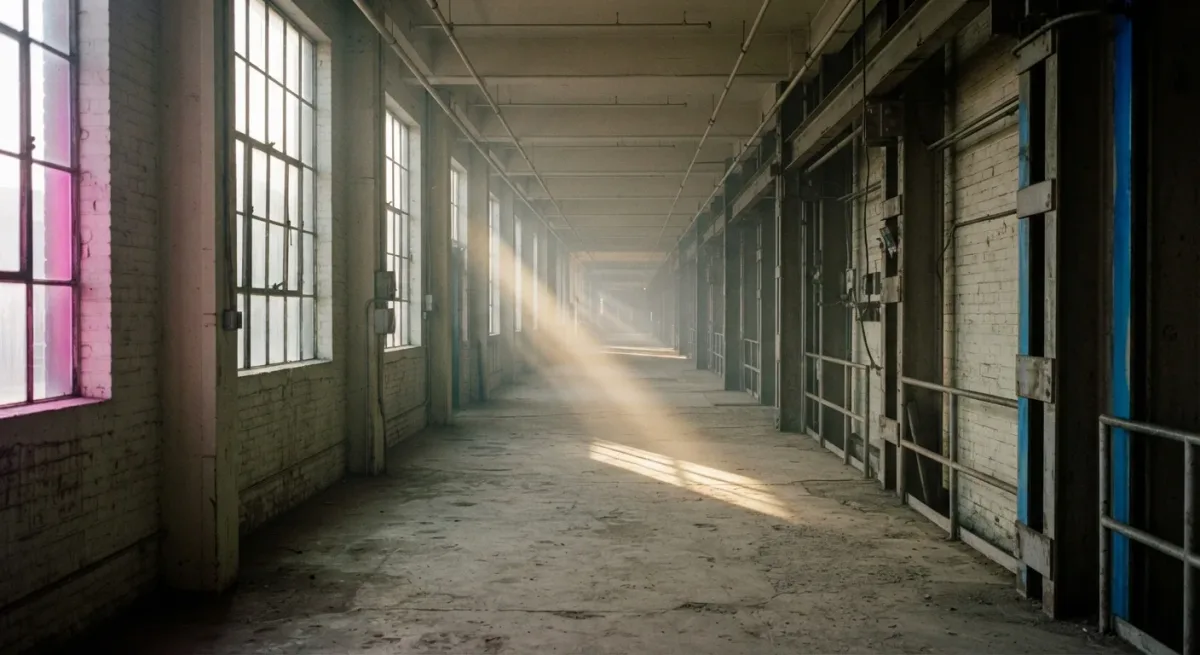
Berghain — the club that opened in a former power plant on the Friedrichshain side of the Oberbaumbrücke in December 2004 — passed its twentieth anniversary in December 2024, two decades in which it became the genre's reference venue: the long-form Sunday marathon, the door policy nobody explains, and a cultural-institution status the German tax authorities themselves confirmed in 2016, when a court ruled its events served cultural purposes and qualified for the reduced VAT rate applied to concerts, per the published ruling. Mega Dance covered the milestone from documented sources; nobody from this desk claimed the door.
Twenty years is an institution in club years, and the survival is the story — most rooms that open never see a tenth of it.
What actually got built there?
A format, mostly. The club's documented template — minimal decoration, marathon durations, a function-first sound system in the main room, and the Panorama Bar's house-and-disco counterweight upstairs — codified what a capital-T techno club could be. The building's industrial scale, a former power station's raw volumes, set the ceiling: the room dictates the night. And the door's famously opaque selection became the venue's real logo, a privacy arrangement the scene's histories trace to the co-founders' earlier Ostgut club and its deliberately protected interior culture — no cameras as house rule, a policy that survived the smartphone era longer than anyone bet.
Why the tax ruling mattered more than any lineup
Because it made clubs culture in law. The 2016 Berlin-Brandenburg fiscal court decision treating Berghain's events as concerts — eligible for the 7 percent cultural VAT rate rather than the 19 percent standard rate — became the precedent German club associations cited in the nationwide campaigns that followed, culminating in the 2021 federal recognition of clubs as cultural venues in tax terms, per the legislative record. A door policy built an interior; a tax case built an industry's legal standing. That is the two-decade arc in one sentence.
What did the 20th year look like from the outside?
The documented record: the club's own announcements and its label Ostgut Ton's release schedule carried the anniversary year, and the surrounding discourse — 20 years measured against Berlin's club-closure statistics, with the city losing venues to development pressure that the same club-association counts document annually — framed the anniversary as a survival marker rather than a party. The comparison other anniversary coverage skipped: when Berghain opened, its borough's club density was thin enough that the plant's size looked reckless; twenty years later the closure lists read as the neighborhood's ecology shrinking around an anchor that held.
What comes next?
The club does not announce futures, and this piece does not invent them. What the documented record establishes: a venue that turned a door, a sound system, and a tax ruling into institutional weight, still operating on its own terms. What it cannot establish is what the next decade of Berlin land economics does to a building that culture made valuable — that is the quiet fight every year of the club-association reports describes, and the twentieth birthday changed nothing about it.
For more context, read Digital Underground frontman Shock G dead at 57.
For more context, read judges.